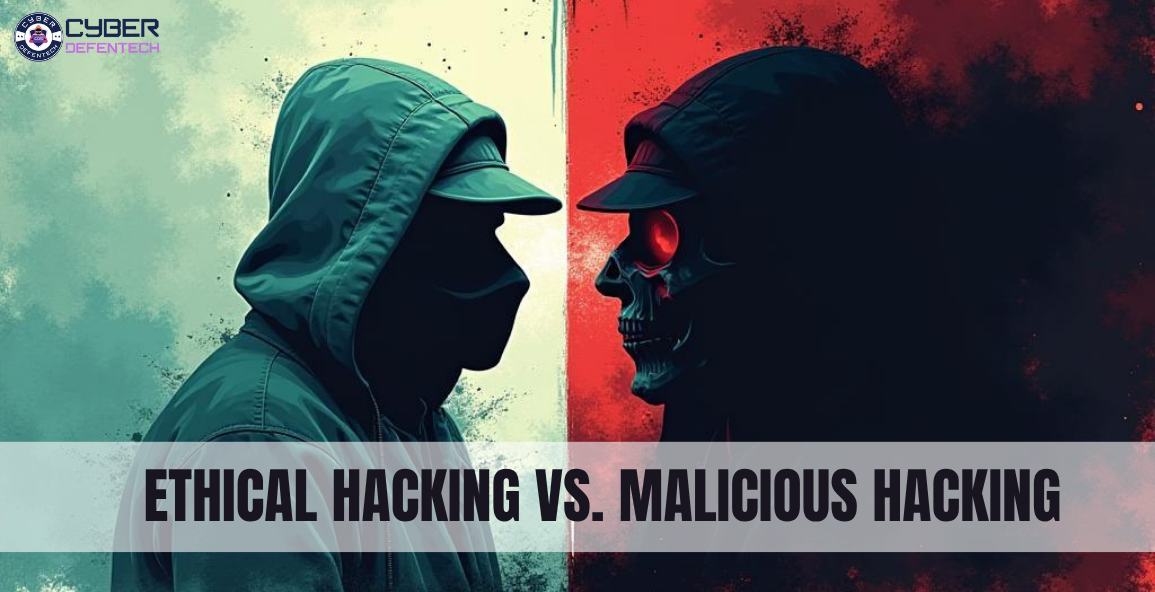
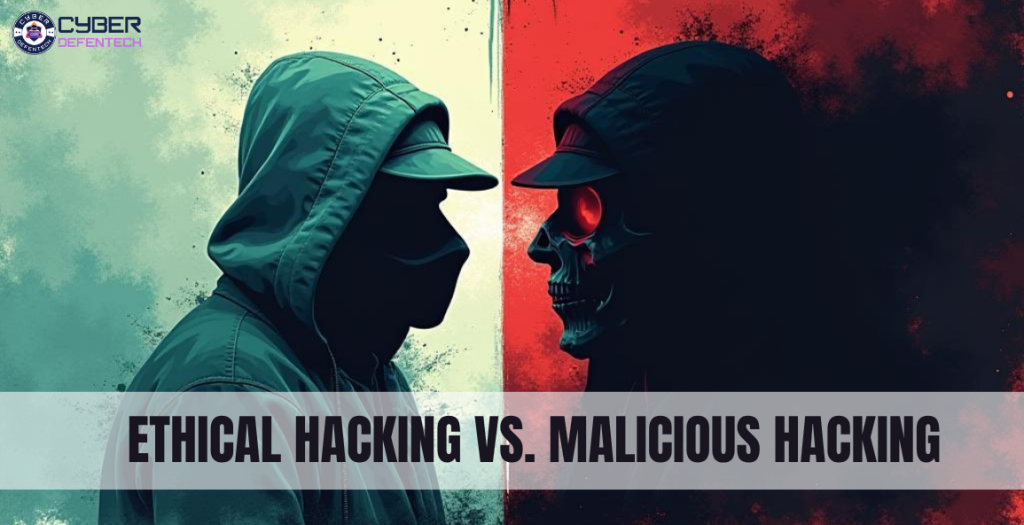
Ethical Hacking has become a buzzword in the world of cybersecurity, but with it comes confusion—especially when people mistakenly equate it with malicious hacking. Both involve hacking, true, but the intent behind them is drastically different. In an age where cyberattacks are more frequent than ever, it’s essential to understand how ethical hackers act as digital guardians, while malicious hackers wreak havoc behind the screen.
In this blog, we will demystify the contrast between ethical and malicious hacking, show you why ethical hacking is a powerful career choice, and introduce you to how you can learn these skills from the best—Cyber Defentech, an official training partner and leading cybersecurity institute in Delhi.
What is Ethical Hacking?
Ethical Hacking refers to the legal practice of testing and assessing the security of digital systems to identify vulnerabilities before malicious hackers can exploit them. Ethical hackers, also known as “white-hat hackers,” are hired by organizations to strengthen their cybersecurity posture. They use the same tools and techniques as attackers but with permission and positive intent.

These professionals are trained, certified, and often hold certifications like CEH (Certified Ethical Hacker), CompTIA Security+, or OSCP. Their goal? To prevent breaches before they happen.
What is Malicious Hacking?
Malicious hacking, or “black-hat hacking,” is the complete opposite. Black-hat hackers exploit systems illegally for personal gain—stealing data, crashing networks, or spreading malware. These actions are criminal and can lead to legal penalties, imprisonment, and lasting harm to both individuals and organizations.
Unlike ethical hackers, malicious hackers operate in secrecy, often under pseudonyms, and their only goal is to cause disruption or extract financial benefit.
Ethical Hacking vs. Malicious Hacking – The Core Differences
| Criteria | Ethical Hacking | Malicious Hacking |
| Intent | To protect systems and data | To exploit systems and data |
| Legality | 100% legal with permission | Illegal and punishable by law |
| Approach | Transparent and documented | Hidden and deceptive |
| End Result | Strengthened security | Financial, reputational, or data damage |
| Employment | Cybersecurity firms, companies, govt. | Underground forums, dark web, syndicates |
Why the Confusion Between the Two?
The term “hacker” has always had a mysterious, often negative tone. Pop culture and news reports often show hackers in hoodies stealing data. This imagery blurs the line between ethical and malicious hacking.
But in reality, ethical hackers are digital heroes. They’re the ones who stop ransomware attacks before they happen, who find flaws in major software systems, and who ensure your bank account and personal information are safe from prying eyes.
Real-Life Examples of Each :
Ethical Hacking Example:
In 2023, an ethical hacker helped Microsoft identify a severe vulnerability in Azure that could’ve exposed millions of users. He responsibly disclosed it, and Microsoft rewarded him under their bug bounty program.
Malicious Hacking Example:
In contrast, the infamous Equifax data breach of 2017 was caused by malicious hackers exploiting a known vulnerability, stealing data of over 147 million Americans. The consequences were devastating—both financially and socially.
Why Choose Ethical Hacking as a Career?
The demand for ethical hackers is soaring. With cyberattacks becoming more complex and frequent, companies—both in the private and government sectors—are actively hiring ethical hackers to protect their infrastructure.
Some top reasons to pursue a career in ethical hacking:
- High salary and growth potential
- Global demand across all industries
- Challenging and dynamic work environment
- A chance to use your skills for good
- Certification-based career path (CEH, CompTIA, OSCP, etc.)
The Impact of Ethical Hackers on Society :
Ethical hackers:
- Protect national security infrastructures
- Keep your financial systems secure
- Defend against terrorist cyberattacks
- Help in forensic investigations
- Train others in cybersecurity awareness
They play a crucial role in our hyperconnected world. As cyberattacks grow in complexity, ethical hackers are our front-line defenders.
How to Recognize a Malicious Hacker’s Behavior ?
- Sends suspicious emails (phishing)
- Asks for personal information online
- Promotes illegal downloads or cracked software
- Accesses unauthorized areas of a system
- Uses anonymous browsers or VPNs to avoid detection
If you ever suspect such activity—report it. Cybercrime isn’t just an IT problem—it’s a societal one.
Learn Ethical Hacking at Cyber Defentech –
If you’re ready to become a certified ethical hacker, Cyber Defentech in Rohini, Delhi is your ideal starting point. As an EC-Council Official Partner, we offer globally recognized certification training with experienced faculty and industry-ready curriculum.
Course Details:
- Course Name: CEH
- Duration: 40 hours (can be completed in 1.5 to 2 months)
- Mode: Online & Offline
- Eligibility: Anyone interested in cybersecurity (no coding required to start)
What You’ll Learn:
- Footprinting and Reconnaissance
- Scanning Networks
- Enumeration
- System Hacking
- Malware Threats
- Sniffing
- Social Engineering
- Web Application Attacks
- SQL Injection
- Wireless and Mobile Hacking
- Cloud Computing and IoT Hacking
Why Cyber Defentech?
- EC-Council Accredited & Official Partner
- Industry-experienced trainers
- Real-world lab access
- Interview preparation & placement support
- Flexible batches
- EMI available
- Affordable pricing
Contact Us:
Call/WhatsApp: +91 8448046612
Email: training@cyberdefentech.com
Website: www.cyberdefentech.com
Future of Hacking: Where Are We Heading?
The lines will continue to blur as AI, automation, and deepfakes evolve. But one thing remains unchanged: intent.
As long as the intent is to protect, empower, and ethically test boundaries, hacking will remain a crucial tool for progress. However, when intent turns malicious, consequences follow—both legal and ethical.
Final Thoughts :
The debate between ethical hacking vs. malicious hacking is not just technical—it’s moral.
One builds.
The other breaks.
One saves lives.
The other risks them.
As technology progresses, we must stop stereotyping all hackers as threats. Instead, let’s celebrate the white-hats who keep the digital world safe and inspire the next generation of cyber defenders.
