Python

Python

Python Course in Delhi | Cyber Defentech Advanced Python Training

Master the industry-relevant Python Training and Certification Course at Cyber Defentech Institute in Delhi. Gain in-depth knowledge of Python programming, from core concepts to advanced applications in web development, automation, data analysis, and AI — all under the guidance of our experienced instructors. Our faculty brings real-world expertise to deliver practical, mentorship-driven learning aligned with current industry demands.

Experience hands-on, classroom-based training using the latest tools, libraries, and frameworks. This comprehensive course covers everything from basic syntax to advanced programming techniques — empowering you to build real-world applications and prepare for high-demand careers in software development, data science, and automation.

What I will learn?

  • Having 24 modules for better enhancement of skills including :
  • Solid understanding of python syntax and semantics
  • Basics algorithms
  • Data manipulations
  • Learn to handle data like NumPy and panadas
  • Conditional statements .

Course Curriculum

Module 1: Introduction to Python

Module 2: Python Basics

Module 3: variables, data types and operation

Module 4: Control Flow

Module 5: Lists and Tuples

Module 6: Dictionaries and Sets

Module 7: Functions

Module 8: File Handling

Module 9: Modules and Libraries

Module 10: String Manipulation

Module 11: Introduction to Object-Oriented Programming (OOP)

Module 12: Exception Handling

Module 13: List Comprehensions

Module 14: Basic Data Structures

Module 15: Introduction to Algorithms

Module 16: Working with Dates and Times

Module 17: Understanding Scope and Lifetime

Module 18: Lambda Functions and Map, Filter, Reduce

Module 19: Recursion

Module 20: Introduction to Python Web Development

Module 21: Introduction to Data Science with Python

Module 22: Working with APIs

Module 23: Introduction to GUI Programming with Tkinter

Module 24: Final Project

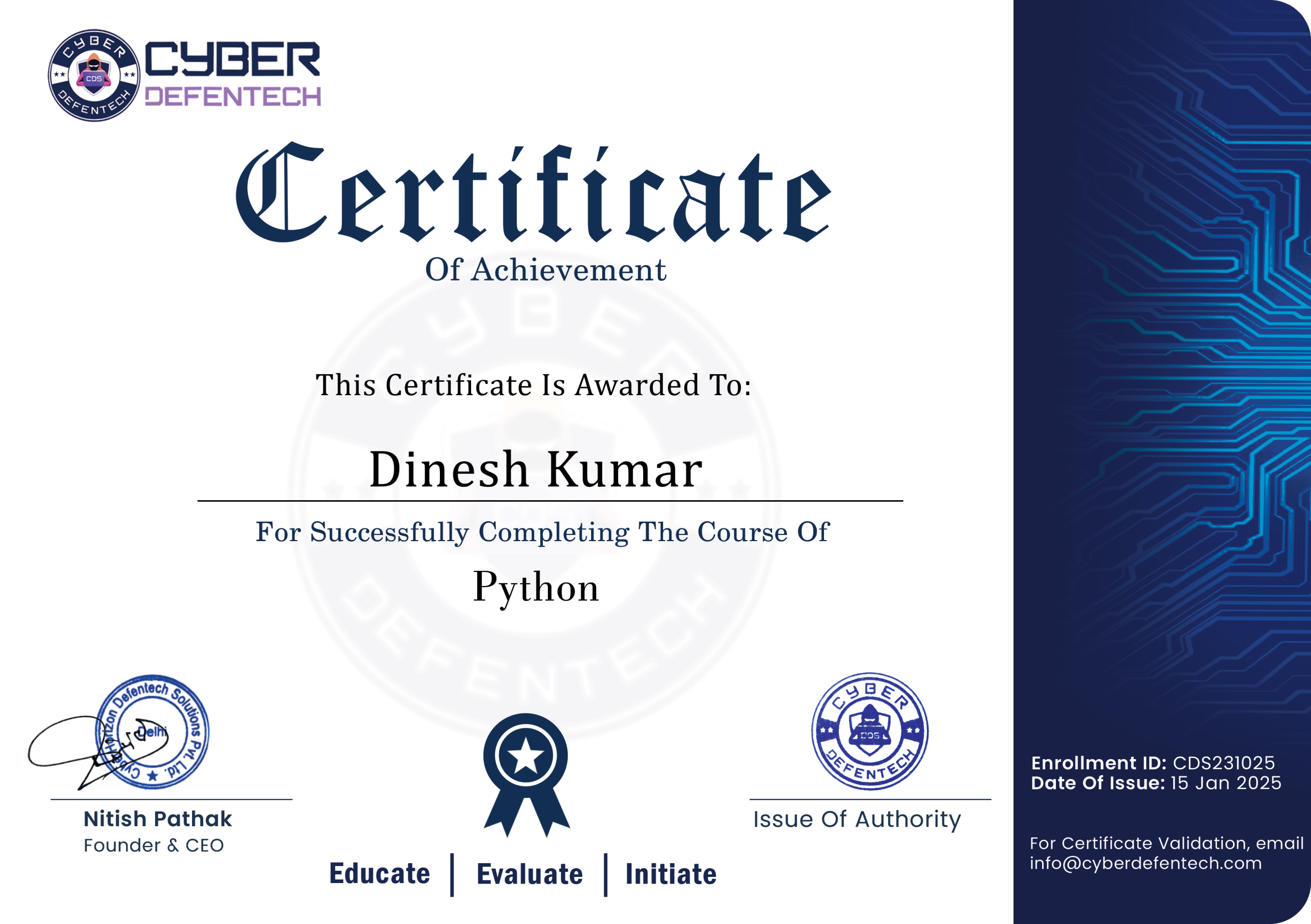
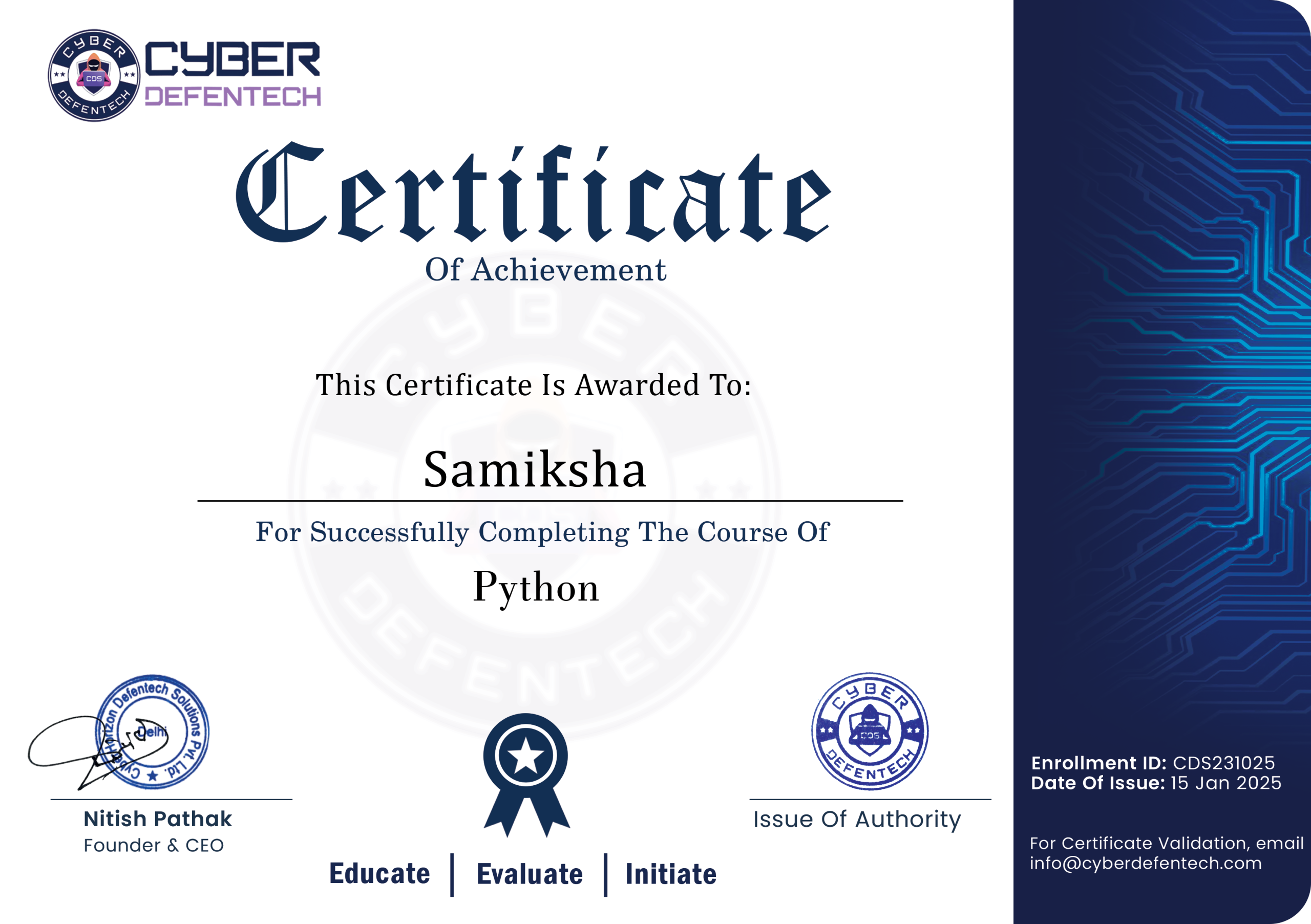
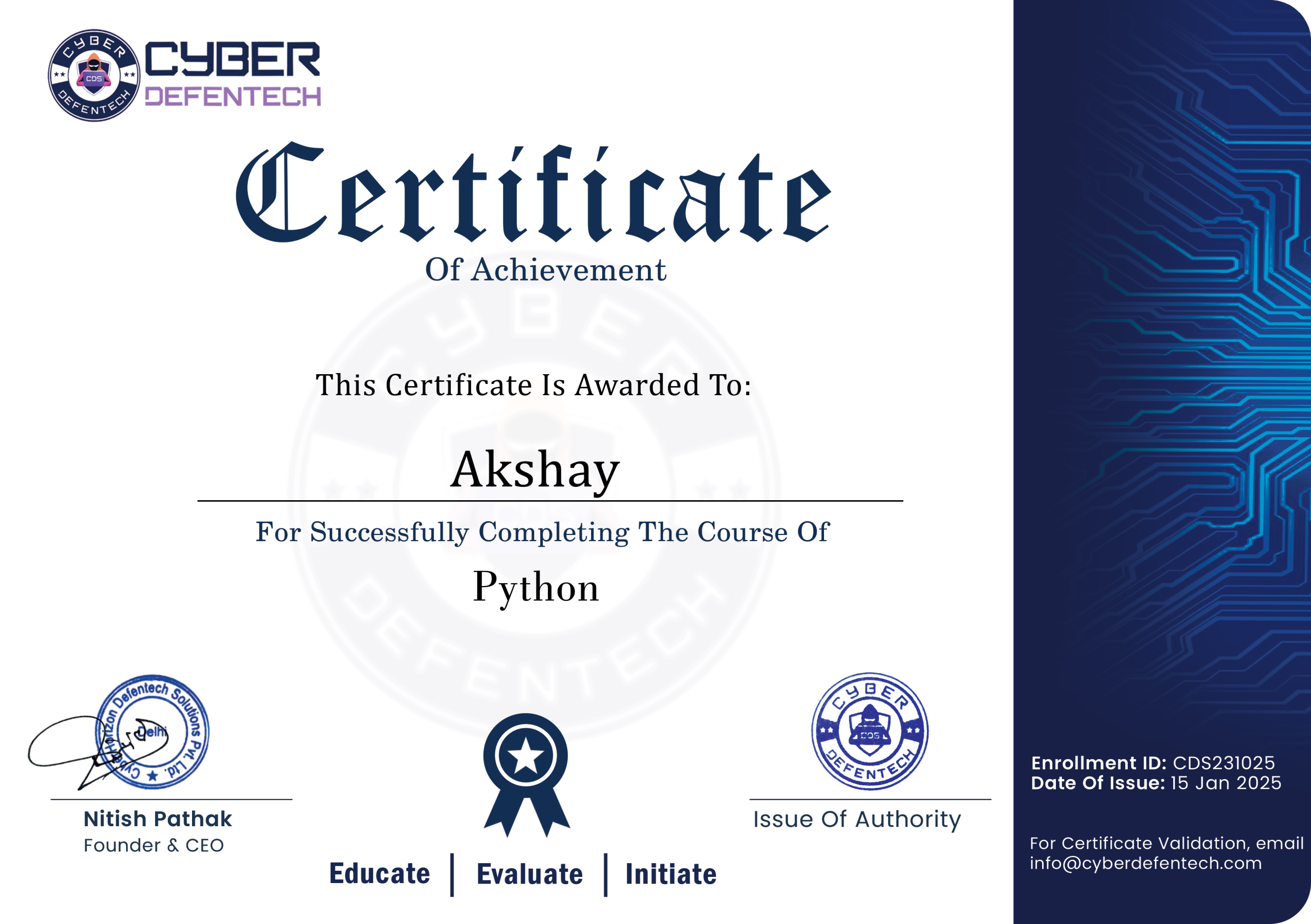
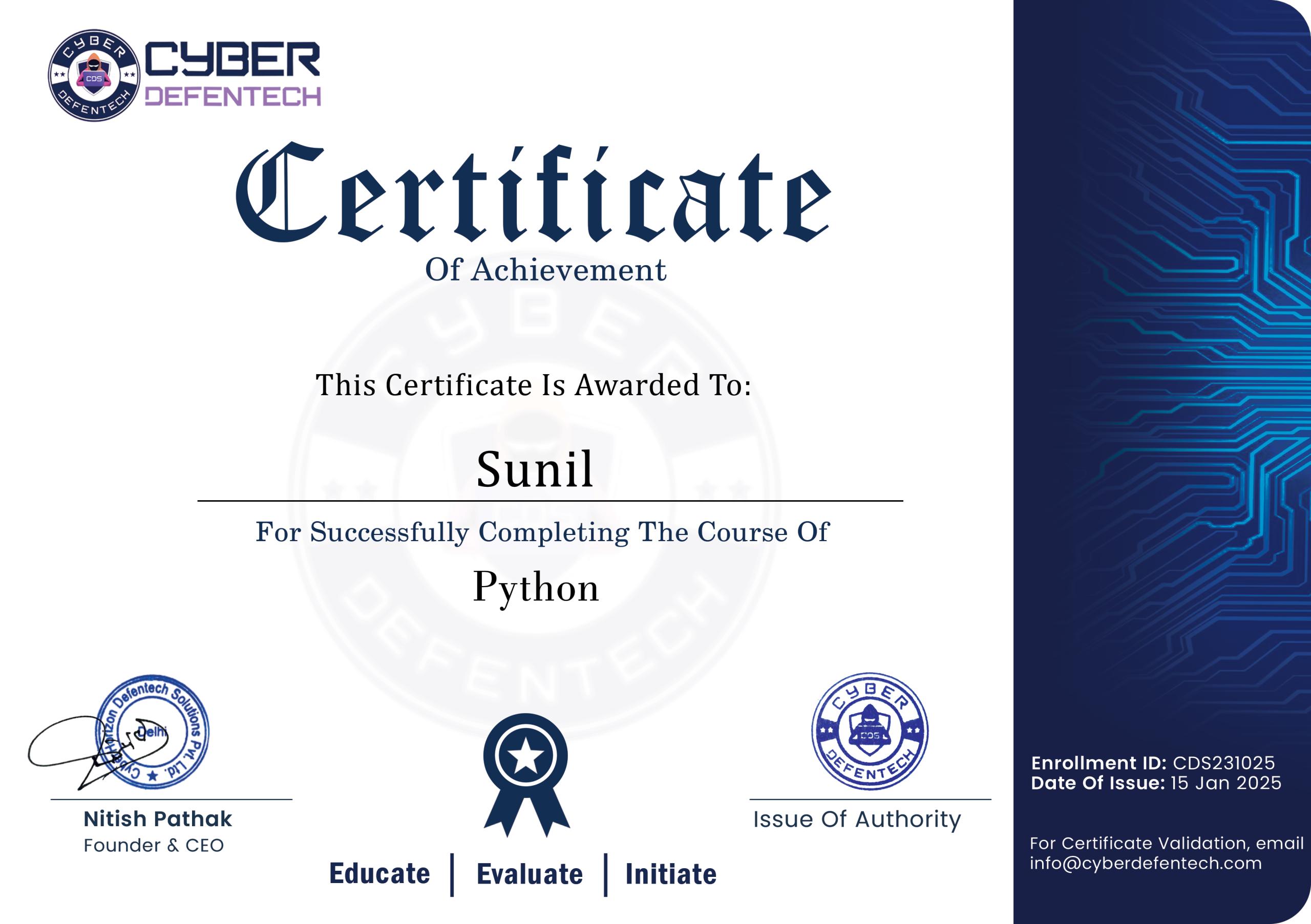
Our Students Theory Certification

Choose Your Preferred Learning Mode

FAQ

Python is a high-level, interpreted programming language known for its simplicity, readability, and versatility. It was created by Guido van Rossum and released in 1991. Python's clean and easy-to-understand syntax makes it an excellent choice for beginners, while its powerful features support complex application development. It is widely used in various fields such as web development, data science, machine learning, artificial intelligence, automation, and cybersecurity. Python is dynamically typed, meaning you don’t need to declare variable types, and it supports object-oriented, functional, and procedural programming styles. Its vast standard library and strong community support make it one of the most popular and in-demand programming languages in the world today.

To learn Python after completing 12th grade, there are no strict prerequisites, making it an ideal language for beginners. However, having some basic computer knowledge—like operating a computer, installing software, and using the internet—can be helpful. A good grasp of logical thinking and problem-solving is also important, as programming involves breaking down problems into smaller steps. Understanding basic English is beneficial too, since Python’s syntax is similar to everyday English. While prior knowledge of mathematics isn’t necessary, basic math skills can be useful, especially if you plan to pursue areas like data science or artificial intelligence. You don’t need any previous coding experience to begin; Python is designed to be easy to learn. All you need is a computer, internet access, and the willingness to practice consistently.

The objectives of a Python course typically focus on providing learners with a comprehensive understanding of the language and its applications. The course aims to teach the fundamentals of Python programming, such as data types, control structures, and functions. It also covers advanced topics like object-oriented programming, file handling, and working with libraries and frameworks. Another key goal is to help students develop problem-solving skills through coding exercises and projects. The course may also introduce real-world applications of Python, such as web development, data analysis, and automation. Ultimately, the objective is to equip learners with the knowledge and skills needed to write efficient, clean code and apply Python to various fields like software development, data science, and artificial intelligence.

A typical Python course covers a wide range of topics, starting from the basics and gradually moving toward more advanced concepts. The key areas usually include:

  1. Introduction to Python – Understanding Python’s history, features, installation, and setup.

  2. Basic Syntax and Variables – Writing simple programs, using variables, and understanding data types.

  3. Operators and Expressions – Using arithmetic, relational, logical, and assignment operators.

  4. Control Structures – Implementing decision-making using if, else, and loops like for and while.

  5. Functions – Defining and calling functions, arguments, return values, and scope of variables.

  6. Data Structures – Working with lists, tuples, dictionaries, and sets.

  7. String Handling – Manipulating text, using string methods, and formatting.

  8. File Handling – Reading from and writing to files.

  9. Exception Handling – Managing errors using try, except, finally, and custom exceptions.

  10. Object-Oriented Programming (OOP) – Learning about classes, objects, inheritance, and polymorphism.

  11. Modules and Packages – Using built-in and third-party modules, creating your own.

  12. Libraries and Frameworks (Intro) – Introduction to popular Python libraries like NumPy, Pandas, or frameworks like Flask (depending on course focus).

  13. Project Work – Applying concepts in mini-projects like calculators, data processors, or simple web apps.

Yes, certification is often available after completing a Python course. Many educational platforms, training institutes, and online learning websites provide a certificate of completion once you finish the course and pass any required assessments or projects. These certificates can help you:

  • Validate your skills in Python programming

  • Enhance your resume and job prospects

  • Demonstrate commitment to learning and skill development

The job market for Python developers is strong and continues to grow rapidly across various industries. Python's simplicity, versatility, and powerful libraries make it one of the most in-demand programming languages today. Companies in fields like web development, data science, machine learning, artificial intelligence, automation, cybersecurity, and cloud computing actively seek Python professionals.

Python is widely used by top tech companies such as Google, Facebook, Netflix, and Amazon, as well as startups and government organizations. Job roles commonly include Python Developer, Data Analyst, Machine Learning Engineer, Backend Developer, DevOps Engineer, and Automation Tester.

With the rise of technologies like AI, big data, and automation, the demand for skilled Python developers is expected to remain high. Overall, learning Python opens up a wide range of job opportunities and offers excellent career growth in the tech industry.
Related Cyber Security Course

Blogs