Master the industry-relevant Ethical Hacking Training and Certification Course at Cyber Defentech Institute in Delhi. Gain deep expertise in ethical hacking and cyber defense, including AI-enhanced hacking methodologies, guided by experienced cybersecurity professionals. Our trainers bring real-world insights to deliver practical, mentorship-driven learning aligned with modern industry standards.
Experience immersive, classroom-based training using the latest tools, techniques, and real-world scenarios. This comprehensive course covers every critical aspect of ethical hacking — empowering you to identify vulnerabilities, ethically exploit systems, and implement effective countermeasures with a strong emphasis on emerging AI-based threats and defenses.
Ethical hacking is the practice of legally breaking into computers, networks, or systems to find and fix security vulnerabilities before malicious hackers can exploit them. It is also known as penetration testing or white-hat hacking.
Ethical hackers are cybersecurity professionals who use the same techniques as criminals—such as scanning for weaknesses, exploiting software flaws, and testing system defenses—but with permission and for a good purpose. Their goal is to strengthen security by identifying risks and recommending solutions to prevent real attacks.
Organizations hire ethical hackers to test their firewalls, networks, websites, applications, and internal systems to ensure they are secure. Ethical hacking plays a crucial role in protecting sensitive data, maintaining privacy, and keeping systems safe from cyber threats.
To start learning Ethical Hacking after 12th, there are no strict educational prerequisites, but having certain foundational skills can help you understand the concepts more effectively and progress faster.
You should know how to operate a computer, manage files and folders, and use the internet.
Familiarity with Windows and Linux, especially Linux, is important because most hacking tools and techniques are used in a Linux environment (e.g., Kali Linux).
A basic understanding of how the internet works, including IP addresses, ports, firewalls, DNS, routers, TCP/IP protocols, etc., is very useful.
While not always mandatory at the start, knowing languages like Python, HTML, or JavaScript helps you understand how systems and web applications work, and how to exploit vulnerabilities.
Most ethical hacking tools, documentation, and tutorials are in English, so basic comprehension is essential.
A strong interest in how systems work and how they can be protected is crucial in cybersecurity.
The main objectives of an Ethical Hacking course are to teach students how to identify, analyze, and fix security vulnerabilities in computer systems and networks—using the same tools and techniques as malicious hackers, but in a legal and ethical way. The course aims to develop practical skills for protecting data, preventing cyberattacks, and ensuring system integrity.
It focuses on building a deep understanding of areas such as network security, web application vulnerabilities, password attacks, malware analysis, penetration testing, and ethical hacking tools (like Metasploit, Nmap, Burp Suite, Wireshark, etc.). Learners are also taught about cybersecurity laws, ethical responsibilities, and how to report and fix discovered issues professionally.
Overall, the objective is to prepare students for roles in cybersecurity, penetration testing, and vulnerability assessment, giving them both theoretical knowledge and hands-on experience to defend digital systems effectively.
An Ethical Hacking course covers a wide range of topics designed to equip learners with the skills to identify, exploit, and fix security vulnerabilities in computer systems, networks, and applications. Below are the key topics typically included:
What is ethical hacking?
Types of hackers (white-hat, black-hat, gray-hat)
Phases of ethical hacking
Legal and ethical responsibilities
Information gathering (passive & active)
Tools: Whois, Maltego, Google hacking, Shodan
Network scanning techniques
Port scanning with Nmap
Vulnerability scanning with Nessus/OpenVAS
Banner grabbing
Password cracking
Privilege escalation
Keylogging and spyware
Clearing logs and hiding tracks
Types of malware: viruses, worms, Trojans
Creating and analyzing malware (in labs)
Detection and removal techniques
Packet sniffing using Wireshark
ARP poisoning and MAC flooding
Countermeasures
Human-based attacks (phishing, impersonation)
Email and phone-based techniques
Prevention methods
Types and techniques
Tools like LOIC, HOIC
Mitigation strategies
TCP/IP session hijacking
Cookie stealing
Countermeasures
SQL Injection
Cross-Site Scripting (XSS)
Cross-Site Request Forgery (CSRF)
Tools: Burp Suite, OWASP ZAP
Cracking WEP/WPA/WPA2 passwords
Rogue access points
Tools: Aircrack-ng, Kismet
Techniques used to bypass security systems
Obfuscation methods
Countermeasures
Basics of encryption and hashing
Common cryptographic attacks
Using tools like Hashcat, John the Ripper
Planning and executing real-world pen tests
Writing professional vulnerability assessment reports
Kali Linux
Metasploit Framework
Nmap, Hydra, Nikto, Burp Suite, and more
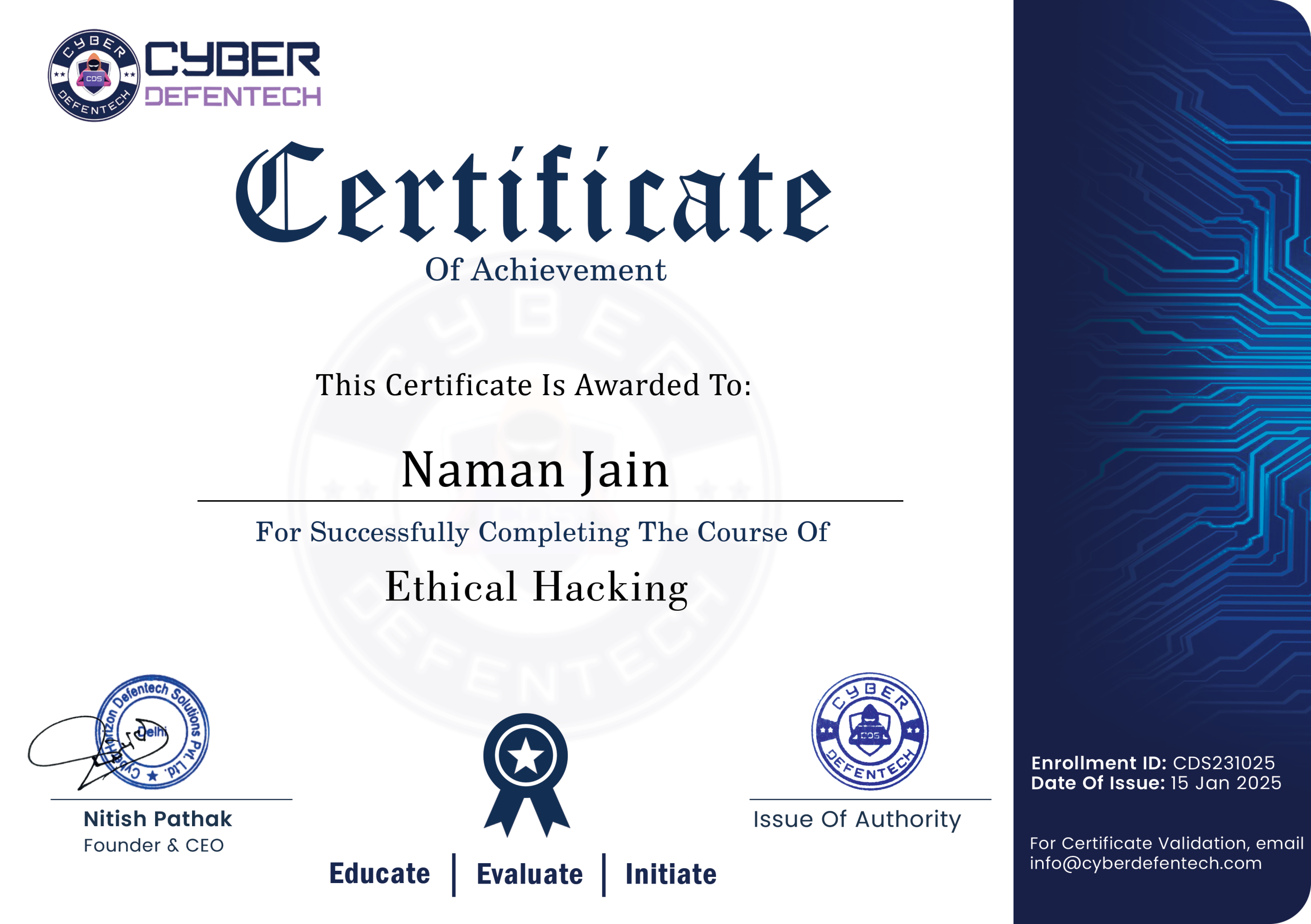
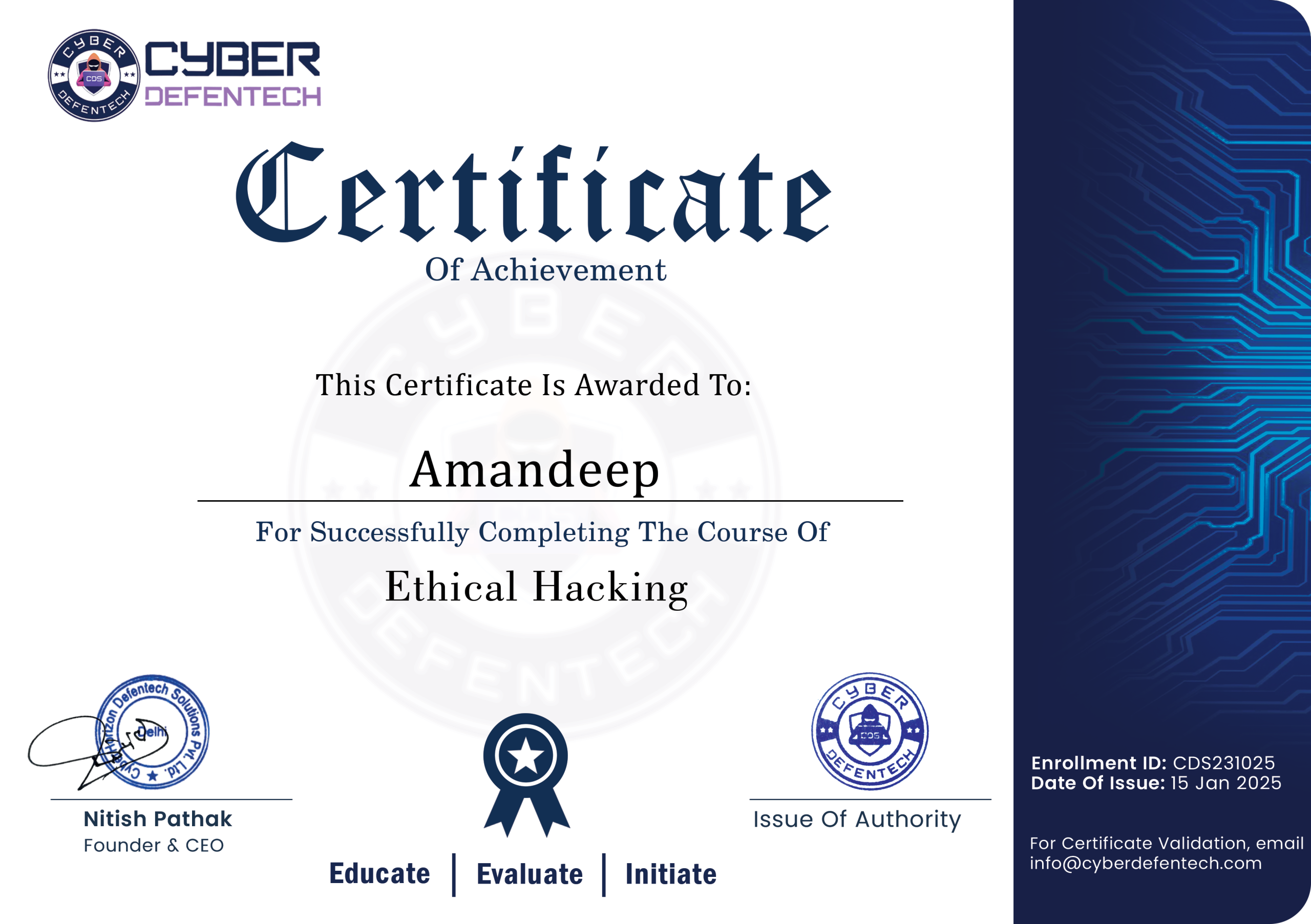
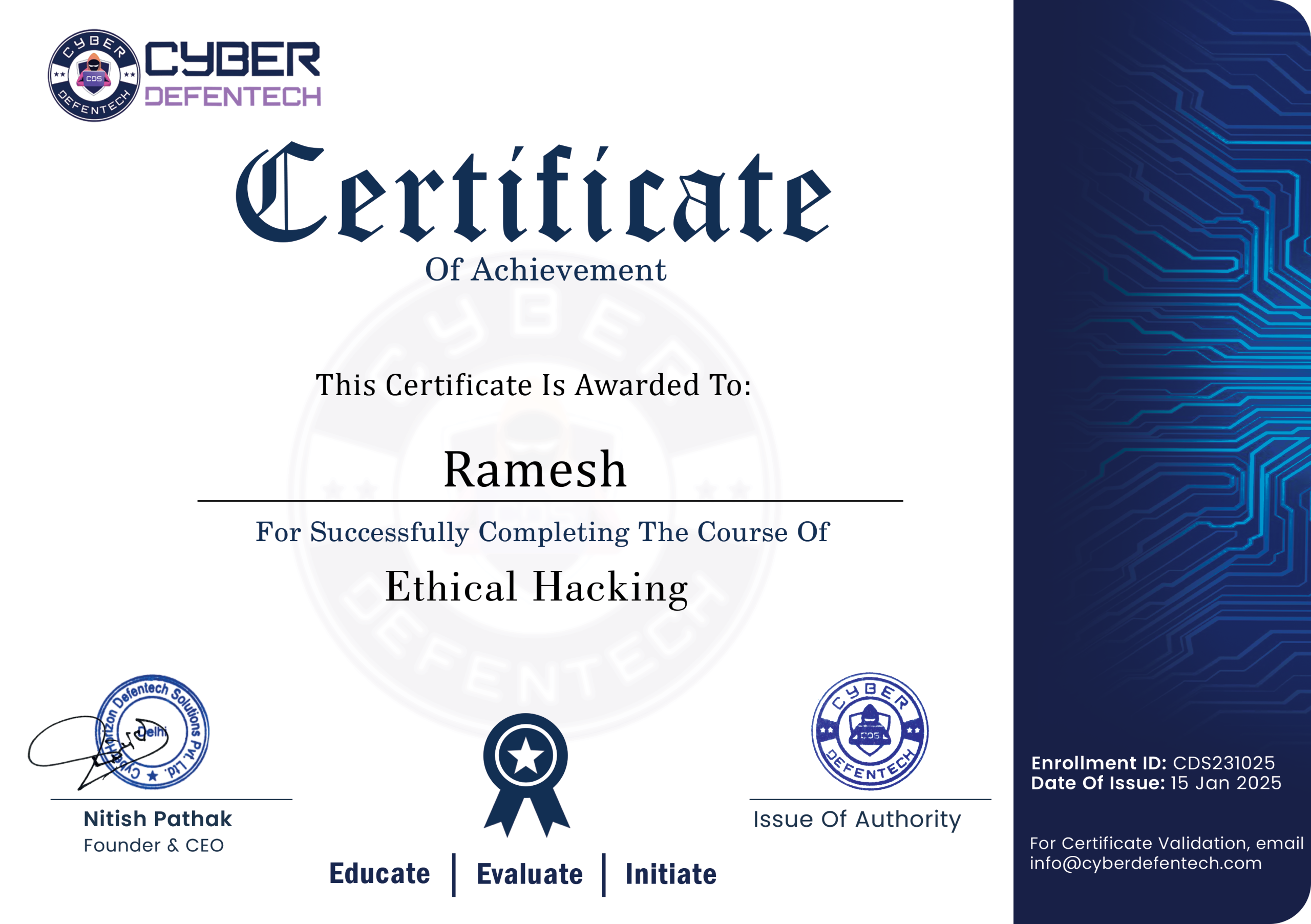
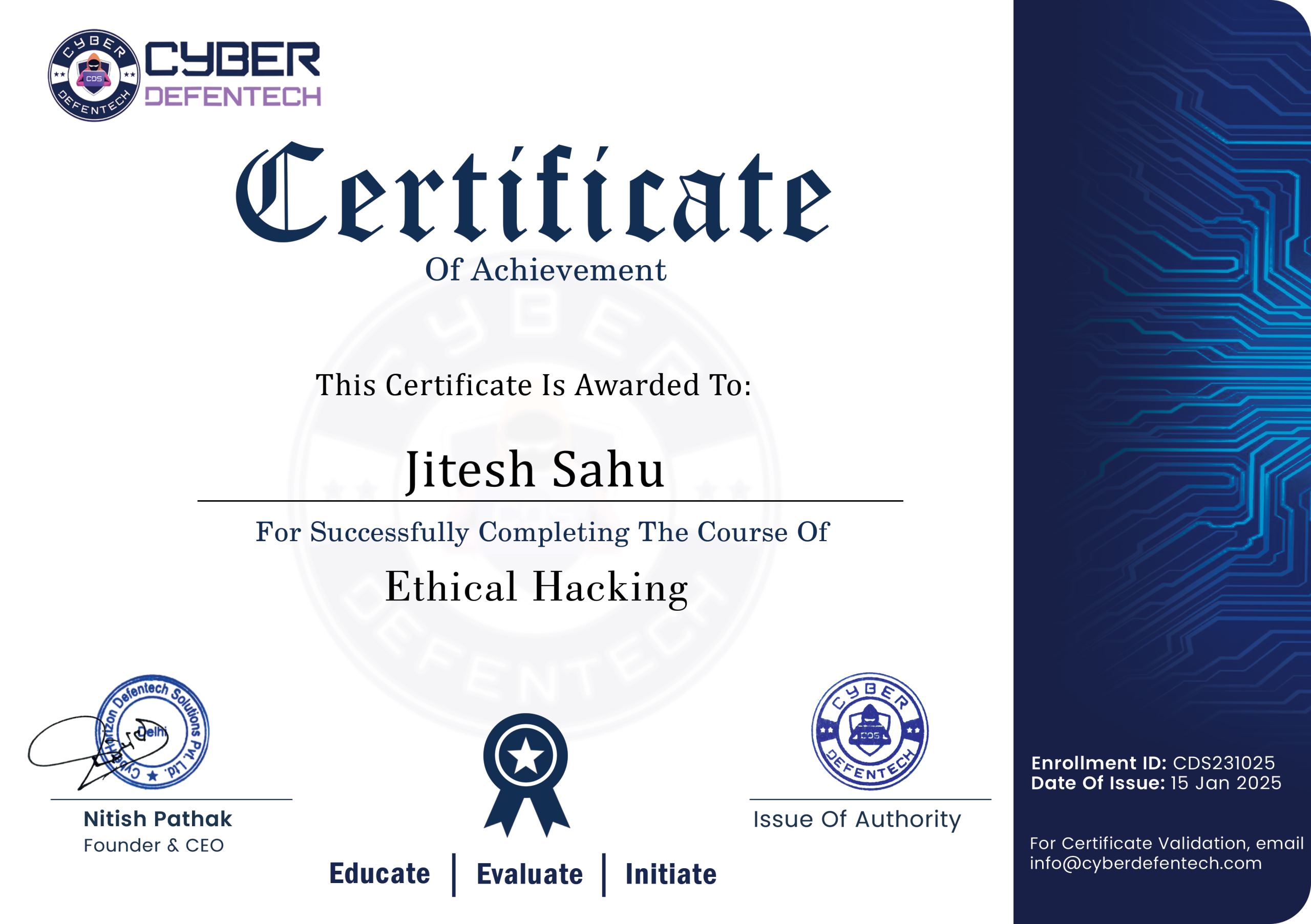
Yes, certification is available after completing an Ethical Hacking course, and it can significantly boost your career in cybersecurity. Many training institutes and online platforms provide a Certificate of Completion, while others prepare you for globally recognized professional certifications.
Yes, certification is available after completing an Ethical Hacking course, and it plays an important role in proving your skills to employers. There are two main types of certifications you can earn.
WhatsApp us