Networking

Basic Networking

Network Course in Delhi | Cyber Defentech Networking Training

Master the industry-relevant Networking Training and Certification Course at Cyber Defentech Institute in Delhi. Gain in-depth knowledge of computer networks, network infrastructure, and communication protocols β€” guided by our expert instructors. Our faculty brings real-world industry experience to deliver practical, mentorship-driven learning aligned with the latest networking and cybersecurity standards.

Experience hands-on, classroom-based training using cutting-edge tools, simulators, and real-time lab environments. This comprehensive course covers all essential aspects of networking, including LAN/WAN technologies, IP addressing, routing, switching, network security, and troubleshooting β€” empowering you to design, configure, and manage robust network systems in today’s digitally connected world.

What I will learn?

  • Having 20 modules for better enhancement of skills including :
  • Introduction to basic networking
  • OSI model
  • TCP/IP model
  • Introduction to IP address
  • Overlay network and virtualization
  • Cloud security
  • Cloud resource management
  • Wireless and mobility
  • Tariff management
  • Routing
  • Network design and architecture
  • Congestion control
  • Port security.

Course Curriculum

Module 1: Introduction To Networking

Module 2: OSI Model

Module 3: TCP/IP Model

Module 4: Introduction To IP4 And IPV6 Addressing

Module 5: Subnetting

Module 6: Routing And Switching

Module 7: ARP And ICMP

Module 8: TCP And UDP Protocols

Module 9: Packet Flow And DHCP Configuration

Module 10: Dynamic Routing

Module 11: RIP, EIGRP

Module 12: Wireless Topologies

Module 13: Firewalls And Network Security Appliances

Module 14: VPNs (Virtual Private Networks)

Module 15: Introduction To NAT And PAT

Module 16: How To Configure A Trunk

Module 17: Troubleshooting Vlans And Trunks

Module 18: How To Configuration VPN

Module 19: L2 Protocols – CDP, VLAN, STP, DTP,VTP

Module 20: Port Security

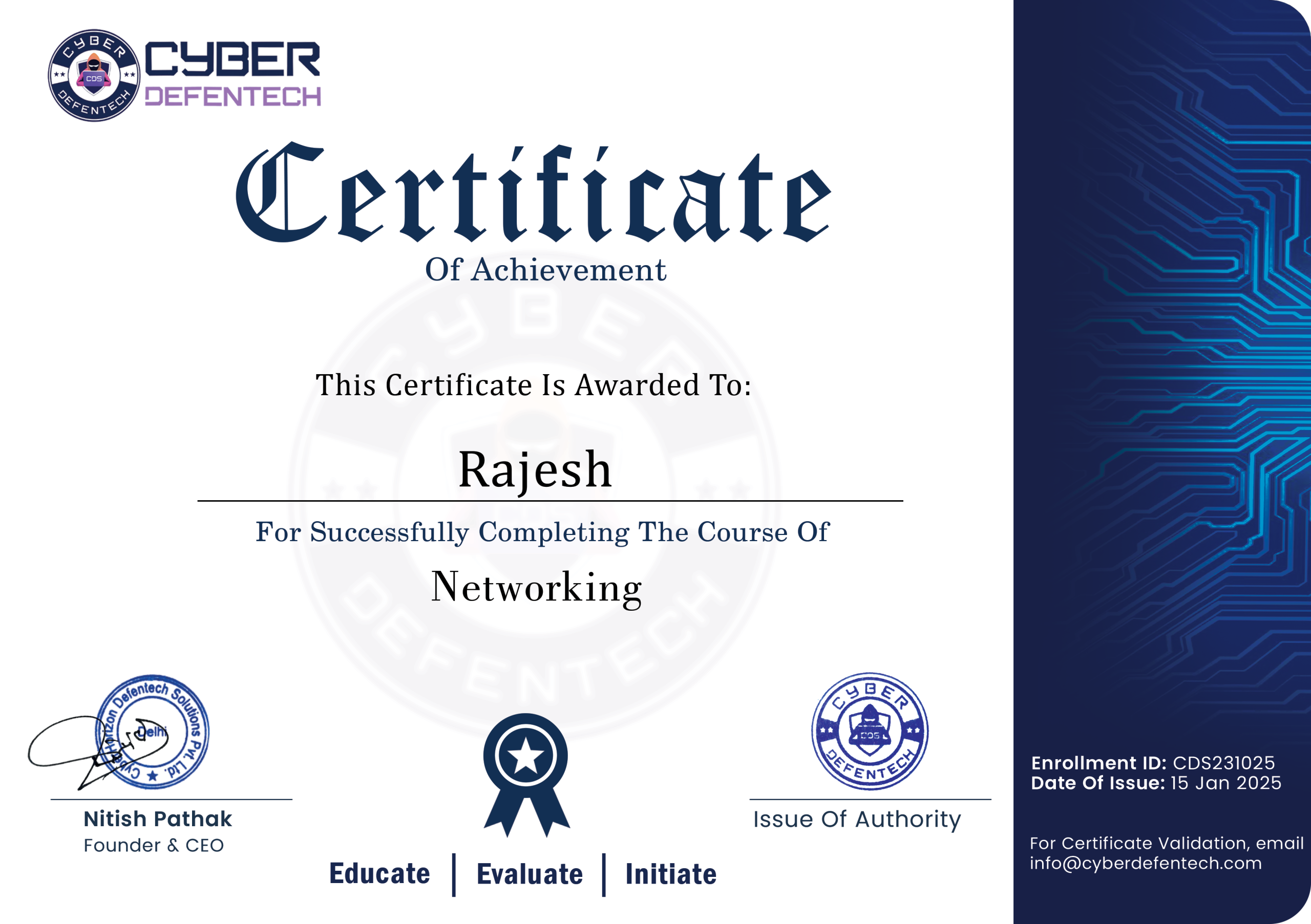
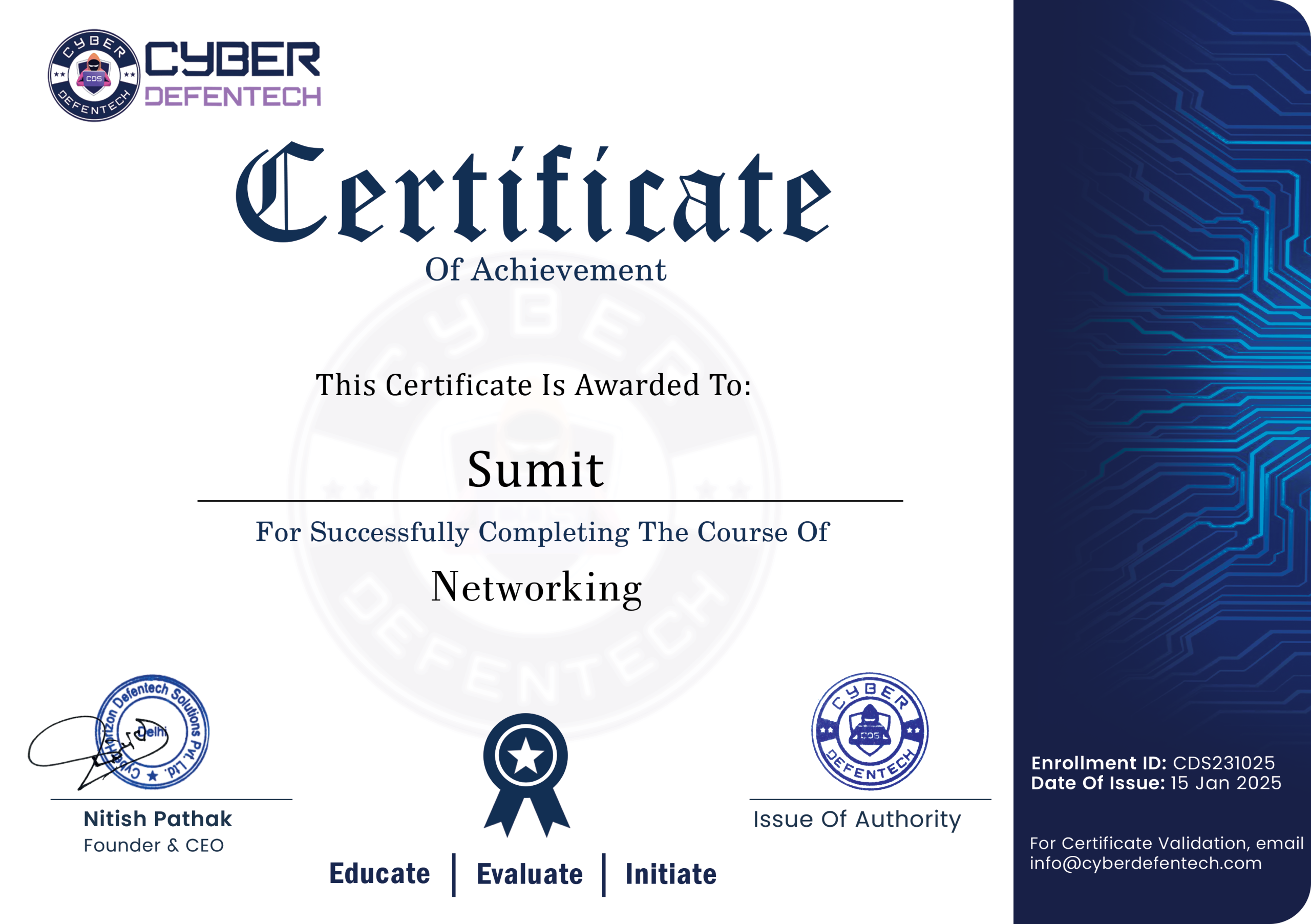
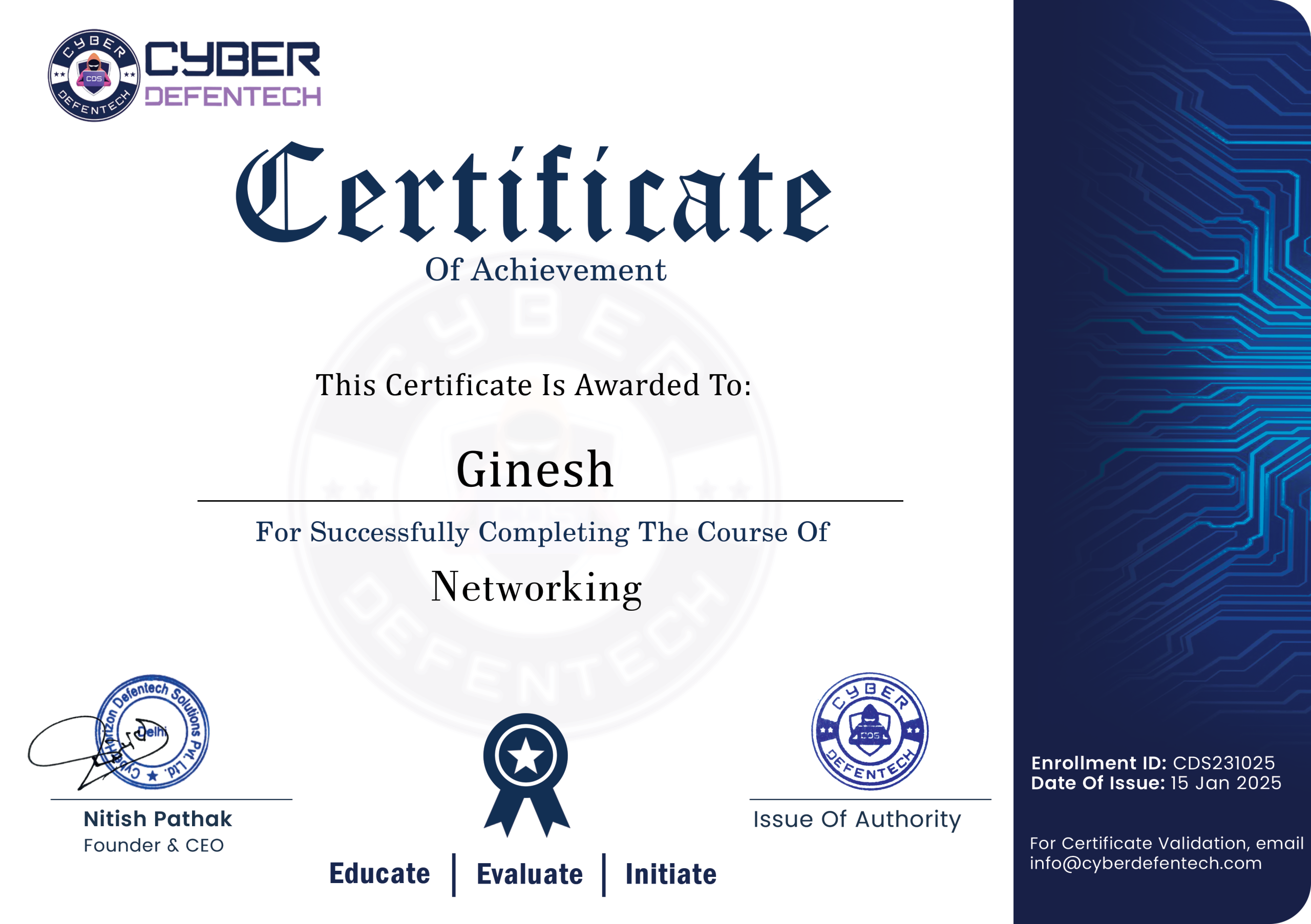
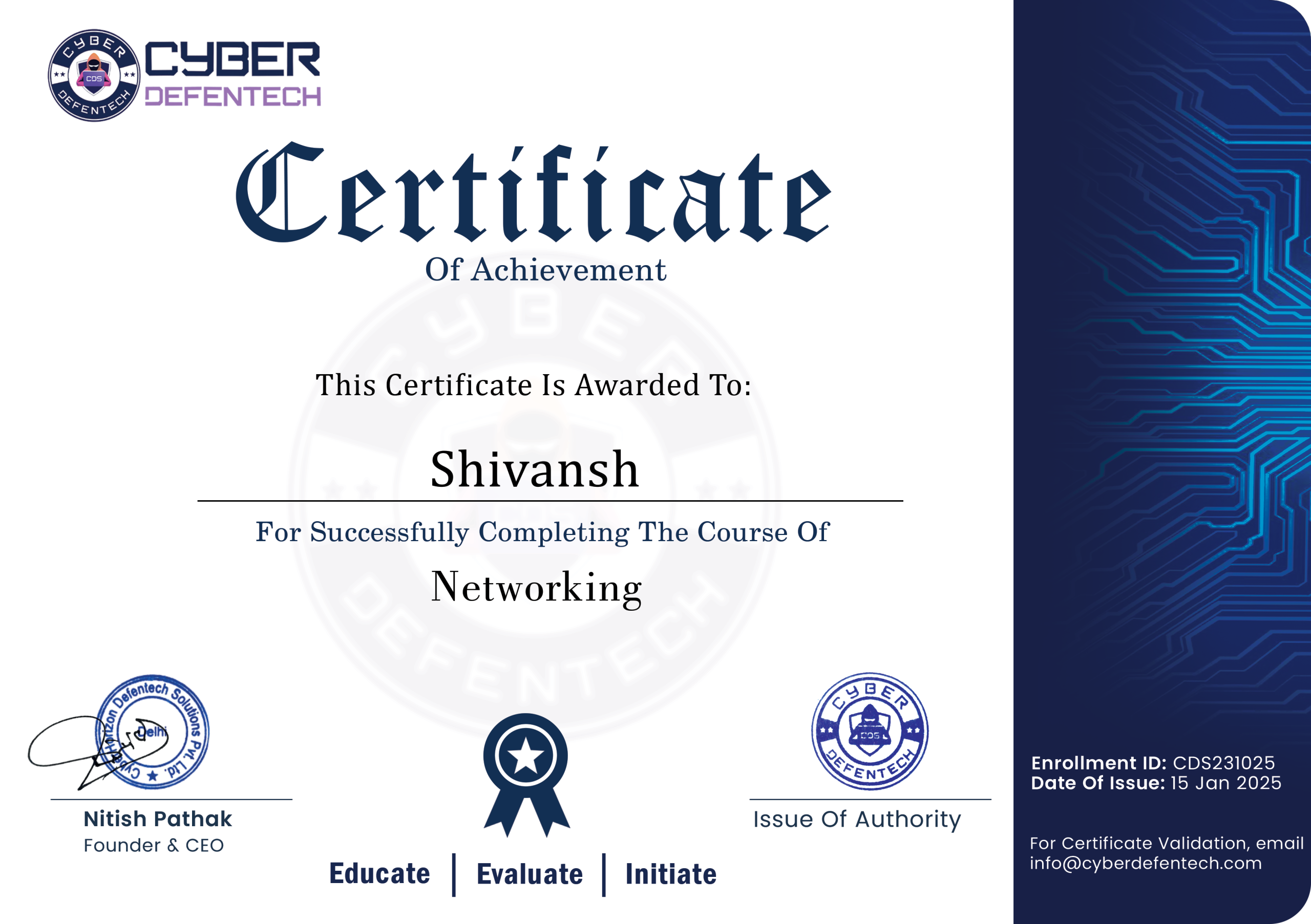
Our Students Theory Certification

FAQ

Networking refers to the practice of connecting computers, servers, and other devices together to share resources, exchange data, and enable communication. These connections can be made using physical cables (wired networks) or wireless signals (Wi-Fi).

In simple terms, networking allows devices to talk to each other β€” whether it's sharing files, accessing the internet, printing from a shared printer, or communicating through emails and applications.

  1. Completed 10+2 (Higher Secondary) from a recognized board (any stream β€” Science, Commerce, Arts).

    • However, Science stream with Physics, Mathematics, and Computer Science is preferred for better understanding.

  2. Basic computer knowledge is highly recommended (e.g., MS Office, operating systems, Internet usage).

The objectives of a networking course are to help learners gain a strong understanding of how computer networks function. The course is designed to teach the basic concepts of networking, including how devices communicate, the role of network hardware, and common networking protocols. Students also learn how to configure and manage networks, assign IP addresses, and troubleshoot technical issues. Additionally, the course aims to introduce essential tools and techniques used to keep networks secure. By the end, learners should be equipped with the practical skills and knowledge needed to work with modern networks and prepare for industry-recognized certifications.

πŸ“˜ Topics Covered in a Networking Course

1. Introduction to Networking

  • What is a network?

  • Types of networks: LAN, WAN, MAN, PAN

  • Client-server vs peer-to-peer models

2. Network Models

  • OSI Model (7 Layers): Explanation and functions of each layer

  • TCP/IP Model: Practical implementation of networking

3. Network Devices

  • Router, Switch, Hub, Modem, Access Point, Repeater

  • Network Interface Cards (NICs) and Cables (UTP, STP, fiber)

4. IP Addressing and Subnetting

  • IPv4 and IPv6

  • Classes of IP addresses

  • Subnetting and supernetting

  • DHCP (Dynamic Host Configuration Protocol)

5. Network Topologies

  • Star, Bus, Ring, Mesh, Hybrid

  • Advantages and disadvantages of each topology

6. Networking Protocols

  • TCP/UDP, HTTP/HTTPS, FTP, DNS, SMTP, POP3, SNMP

  • ARP, ICMP, NAT, VPN basics

7. Routing and Switching

  • Static and Dynamic Routing

  • RIP, OSPF, EIGRP (for advanced courses)

  • VLANs (Virtual LANs) and Inter-VLAN Routing

  • MAC addresses and Layer 2 switching

8. Wireless Networking

  • Wi-Fi standards (802.11a/b/g/n/ac/ax)

  • Wireless security (WEP, WPA, WPA2, WPA3)

  • Configuration of access points and wireless routers

9. Network Security Basics

  • Common threats: Malware, DoS/DDoS, Phishing

  • Use of firewalls, antivirus, encryption, access control

  • Introduction to network monitoring tools

10. Network Configuration and Troubleshooting

  • Commands: ping, tracert, ipconfig, netstat, nslookup

  • Troubleshooting steps and diagnostics

  • Hands-on with simulators: Cisco Packet Tracer, GNS3

11. Network Management and Monitoring

  • Bandwidth management

  • Network performance analysis

  • SNMP and network monitoring tools

12. Introduction to Cloud & Virtual Networks (Optional/Advanced)

  • Basic concepts of cloud networking

  • Introduction to SDN (Software Defined Networking) and virtual LANs

Yes, certification is often available after completing a Networking course, and it plays a key role in validating your knowledge and skills in the IT and networking industry.

πŸ“Š Current Job Market Overview for Networking Professionals:

βœ… High Demand Across Industries

  • Companies in IT, finance, healthcare, education, government, and telecom need networking professionals.

  • The rise of cloud computing, remote work, cybersecurity, and IoT (Internet of Things) is creating more job opportunities.

βœ… Global Demand

  • Countries like the USA, Canada, UK, Germany, Australia, and Gulf nations actively hire certified network engineers and administrators.

  • India is also a growing hub for networking jobs due to the IT services and startup boom.

Choose Your Preferred Learning Mode

Related Cyber Security Course

Blogs