Android Penetration Testing

Android Penetration Testing

Android Penetration Testing Course in Delhi | Cyber Defentech Advanced Android Penetration Testing Training

Master the industry-relevant Android Penetration Testing Training and Certification Course at Cyber Defentech Institute in Delhi. Gain in-depth expertise in ethical hacking and advanced mobile application penetration testing techniques, including AI-powered threat analysis and exploitation, all guided by our expert instructors. Our faculty combines real-world experience with hands-on mentorship to deliver practical training aligned with the latest mobile security and cybersecurity standards.

Experience immersive, classroom-based learning with the latest tools, frameworks, and testing environments tailored for Android platforms. This comprehensive course equips you with the skills to identify, analyze, and exploit vulnerabilities in Android apps — empowering you to secure mobile environments against evolving AI-driven threats and attacks.

What I will learn?

  • Having 26 modules for better enhancement of skills including :
  • Introduction to android security
  • Android application architecture
  • Setting up the testing environment
  • OWASP top 10
  • SSL Pinning
  • Static analysis techniques
  • Reverse tampering
  • IOS penetration testing and many more.

Course Curriculum

Module 1: Introduction To Android Security

Module 2: Android Application Architecture

Module 3: Setting Up The Testing Environment

Module 4: OWASP Top 10

Module 5: Apt File Structure

Module 6: Reversing App With APK Tool

Module 7: Reversing App With Mobsf

Module 8 Static Analysis Techniques

Module 9: Vulnerability Scanning With Drozer

Module 10: Dynamic Analysis Techniques

Module 11: Improper Platform Usage

Module 12: Insecure Data Storage

Module 13: Insecure Communication

Module 14: Insecure Authentication

Module 15: Insufficient Cryptography

Module 16: Insecure Authorization

Module 17: Reverse Tampering

Module 18: Exploiting Common Android Vulnerabilities

Module 19: Secure Coding Practices For Android Developers

Module 20: Advanced Dynamic Analysis

Module 21: SSL Pinning

Module 22: Secure Network Communication

Module 23: Reverse Engineering Android Apps

Module 24: Report Writing

Module 25: IOS Penetration Testing

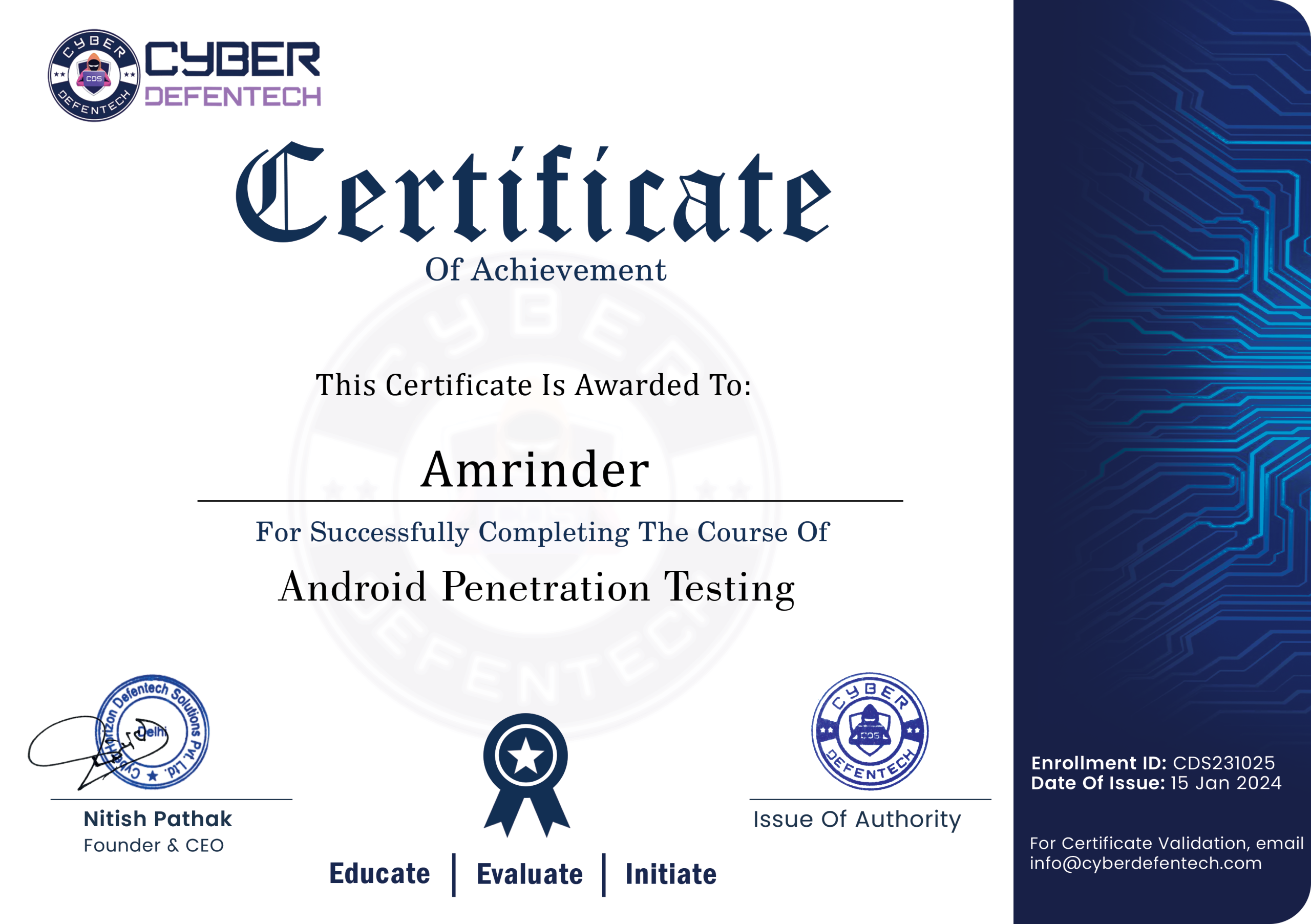
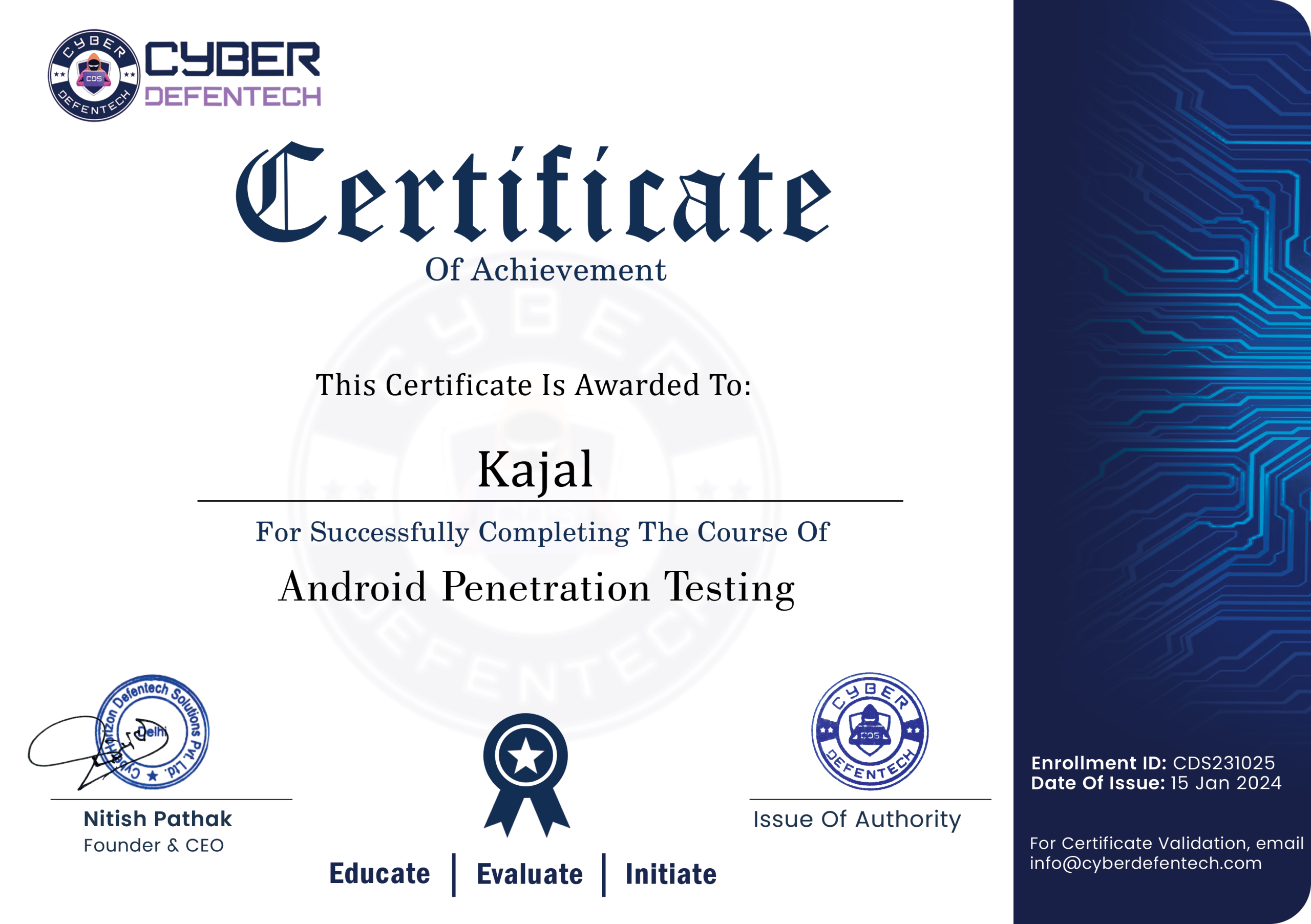
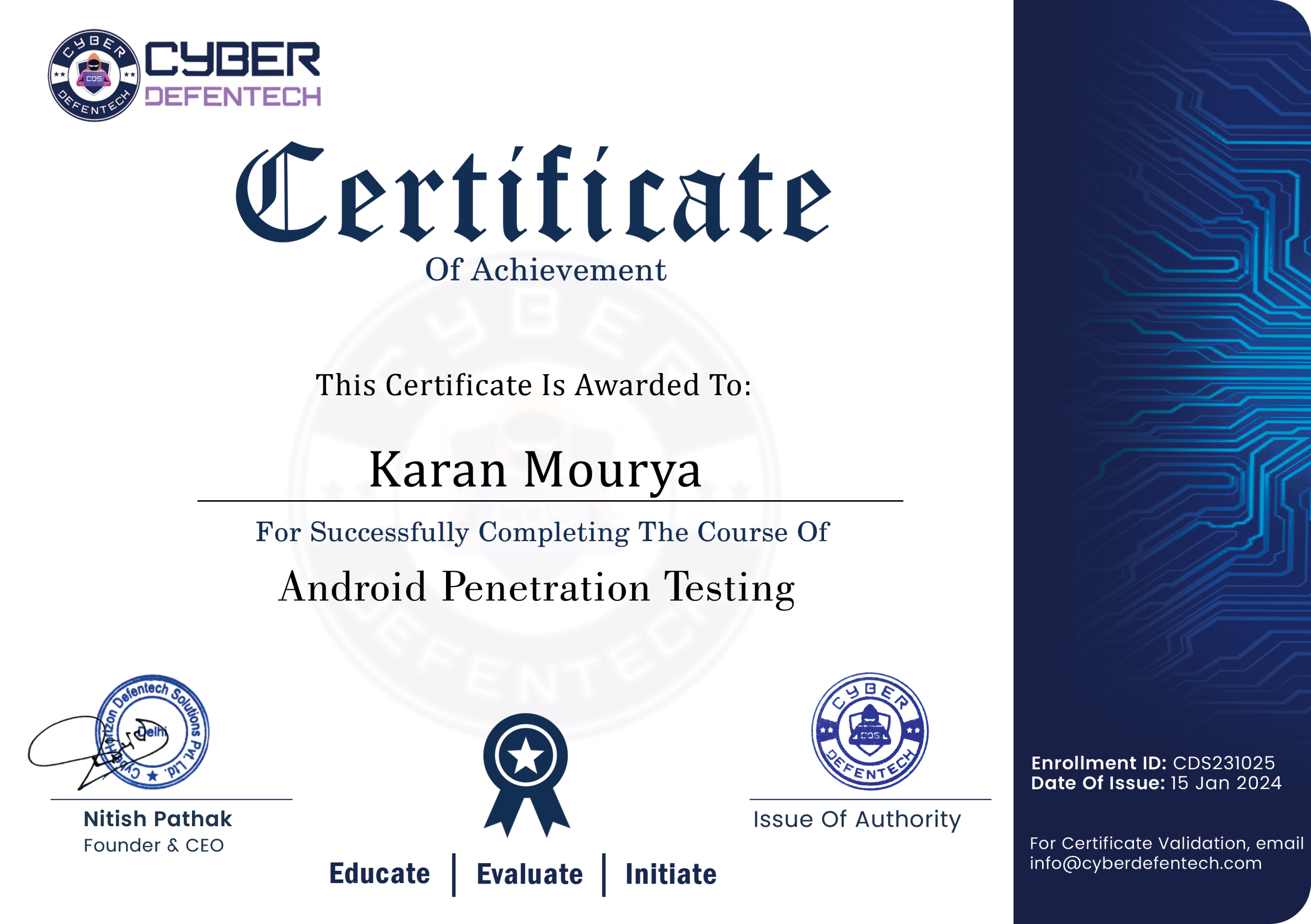
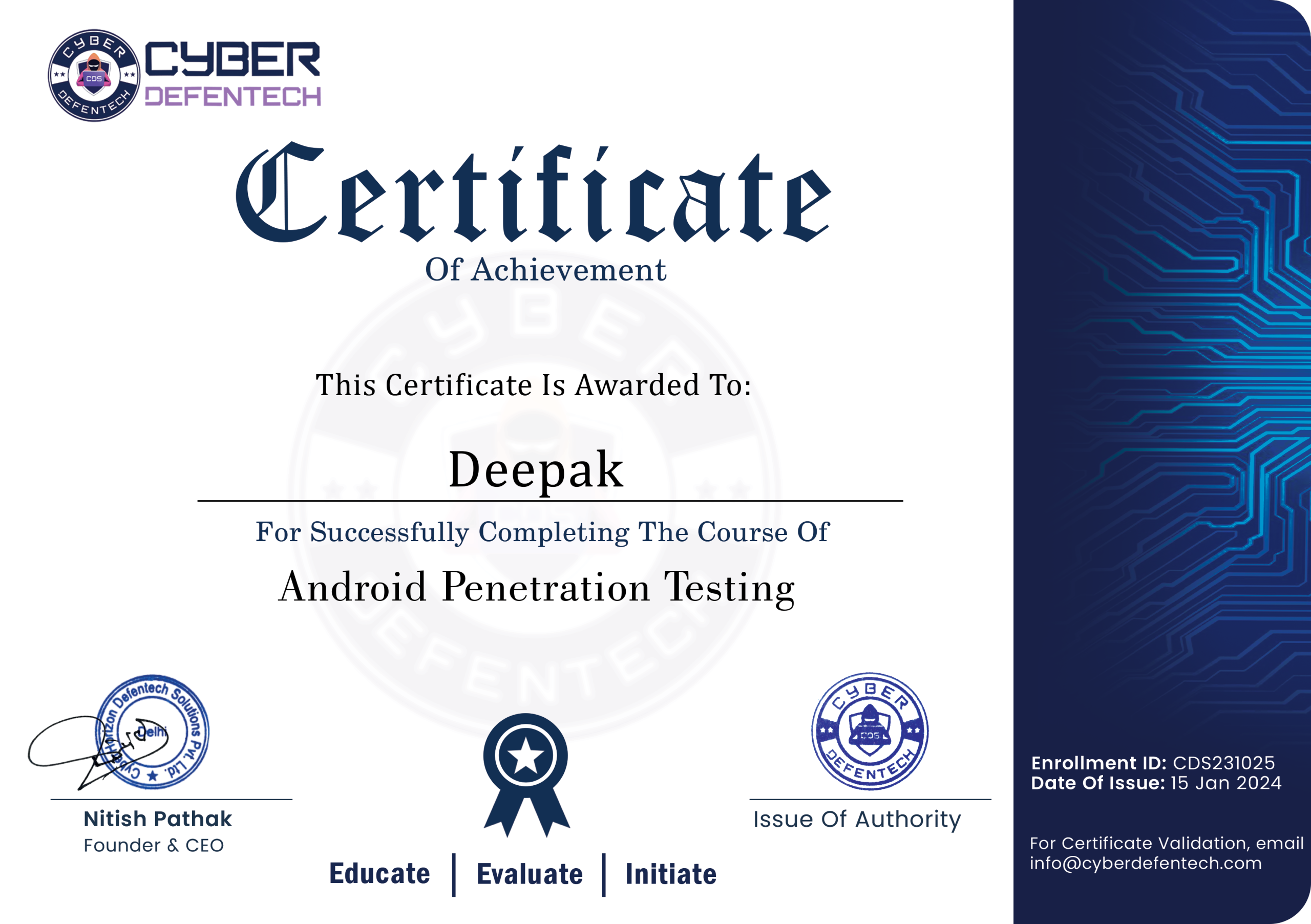
Our Students Theory Certification

FAQ

There are no strict prerequisites for learning Linux after 12th, which makes it a great choice for students interested in IT, cybersecurity, or software development. However, having some basic skills and knowledge can help you get started more easily:

To take up an Android Penetration Testing course after 12th, you don’t need a formal degree, but you should have some basic technical knowledge and interest in cybersecurity or mobile apps. Here are the recommended prerequisites:

Educational Requirements:

  • Completed 12th standard (any stream, preferably with science or computer applications)

  • Good understanding of English (as most tools and courses are in English)

💻 Technical Prerequisites (Recommended):

  1. Basic Knowledge of Android:

    • How Android apps work

    • APK structure (AndroidManifest.xml, smali, classes.dex)

  2. Familiarity with Programming:

    • Basics of Java or Kotlin (used in Android apps)

    • Some knowledge of Python (optional, helpful for scripting)

  3. Operating System Concepts:

    • Understanding of Linux/Unix commands

    • Comfortable using command-line tools (on Linux or Kali)

  4. Networking Basics:

    • How mobile apps communicate over the internet

    • IP addresses, ports, HTTP/HTTPS protocols

  5. Cybersecurity Fundamentals:

    • Knowledge of what vulnerabilities are

    • Common attack types (e.g., MITM, reverse engineering, insecure data storage)

ChatGPT said:

The main objectives of an Android Penetration Testing course are to equip learners with the skills needed to analyze, test, and secure Android mobile applications against real-world cyber threats. Here's a breakdown of the key goals

An Android Penetration Testing course typically covers a wide range of topics to help students understand how to analyze, exploit, and secure Android applications. Here's a structured list of the key topics included in most professional courses:

📱 1. Introduction to Android OS

  • Android architecture and components

  • APK file structure and file systems

  • Android security model and sandboxing

🧰 2. Lab Setup for Android Testing

  • Installing Android Studio and emulators

  • Using Genymotion or VirtualBox

  • Rooted device or emulator configuration

  • ADB (Android Debug Bridge) basics

🧠 3. Static Analysis

  • Reverse engineering APKs

  • Decompiling apps using JADX, apktool, MobSF

  • Analyzing AndroidManifest.xml and Java/Kotlin code

  • Identifying hardcoded credentials and API keys

🚦 4. Dynamic Analysis

  • Intercepting traffic using Burp Suite

  • Monitoring app behavior at runtime

  • Hooking apps using Frida or Xposed Framework

  • Logcat monitoring and debugging

🔓 5. Common Vulnerabilities in Android Apps

  • Insecure data storage (Shared Preferences, SQLite, Internal Storage)

  • Insecure communication (HTTP, no SSL pinning)

  • Insecure authentication and session management

  • Improper use of WebView

  • Broken cryptography

  • Code tampering and app repackaging

🛠️ 6. Advanced Exploitation Techniques

  • Bypassing root/jailbreak detection

  • Circumventing SSL pinning

  • Modifying app logic and bypassing login

  • Accessing hidden activities and exported components

🔐 7. Secure Coding Practices

  • How to fix common security issues

  • Best practices for secure Android development

  • Data encryption and safe storage methods

📋 8. Report Writing & Documentation

  • How to write professional vulnerability reports

  • Communicating findings to developers or clients

  • Sample templates for penetration test reports

🧪 9. Capstone Project or Practical Test

  • Real-world application testing

  • Live scenario exploitation

  • Hands-on demonstration of tools and findings

Yes, certification is available after completing an Android Penetration Testing course—especially if you enroll in a recognized training program or platform. These certifications validate your skills in mobile app security and enhance your job prospects in cybersecurity.

The job market for Android Penetration Testing is strong and growing rapidly due to the massive reliance on mobile apps across every industry. With Android being the most widely used mobile operating system globally, securing Android applications is a top priority for companies—creating high demand for skilled Android security professionals.

Choose Your Preferred Learning Mode

Related Cyber Security Course

Blogs