Web Application Penetration Testing

Web Application Penetration Testing

Web Application Penetration Testing Course in Delhi | Cyber Defentech Advanced Web Application Penetration Testing Training

Master the industry-relevant Web Application Penetration Testing Training and Certification Course at Cyber Defentech Institute in Delhi. Develop advanced skills in ethical hacking and secure coding by learning how to identify and exploit vulnerabilities in modern web applications โ€” including AI-driven attack surfaces โ€” all under the guidance of seasoned cybersecurity experts. Our instructors bring hands-on, real-world experience to deliver practical, mentorship-focused training aligned with the latest OWASP and cybersecurity standards.

Engage in fully interactive, classroom-based sessions using the latest tools, frameworks, and testing environments. This comprehensive course dives deep into web application security, vulnerability scanning, and exploitation techniques โ€” empowering you to assess, attack, and defend web applications effectively, with a strong emphasis on AI-integrated threat detection and prevention.

What I will learn?

  • Having 28 modules for better enhancement of skills including :
  • Introduction to Web Application Security
  • Web Application Basics
  • OWASP Top 10
  • XSS attacks
  • Burp suite
  • SQL Injection
  • Access control
  • Cross Site Scripting ( XSS)
  • File upload security
  • Host Header Injection
  • URL Redirection
  • Capstone Project
  • Report Writing and many more.

Course Curriculum

Module 1: Introduction To Web Application Security

Module 2: Web Application Basics

Module 3: OSWAP Top 10

Module 4: Web Application Reconnaissance

Module 5: Web Application Scanning And Enumeration

Module 6: Web Application Authentication Testing

Module 7: Broken Access Control

Module 8: Security Misconfiguration

Module 9: Cross-Site Scripting (XSS)

Module 10: Cross-Site Request Forgery (CSRF)

Module 11: Sql Injection

Module 12: Sql Authentication Bypass

Module 13: Ssrf – Server Side Request Forgery

Module 14: File Upload Security

Module 15: LFI – Local File Inclusion And RFI – Remote File Inclusion

Module 16: Idor – Inseacure Direct Object Referance

Module 17: Security Headers And Configuration

Module 18: Web Application Firewalls (WAF)

Module 19: Client-Side Security Testing

Module 20: Advanced Burp Suite Usage

Module 21: Vulnerable And Outdated Components

Module 22: Host Header Injection

Module 23: Jwt Token Attacks

Module 24: Url Redirection

Module 25: Http Request Smuggling

Module 26: Ssti- Server Side Tamplate Injection

Module 27: Capstone Project

Module 28: Report Writting

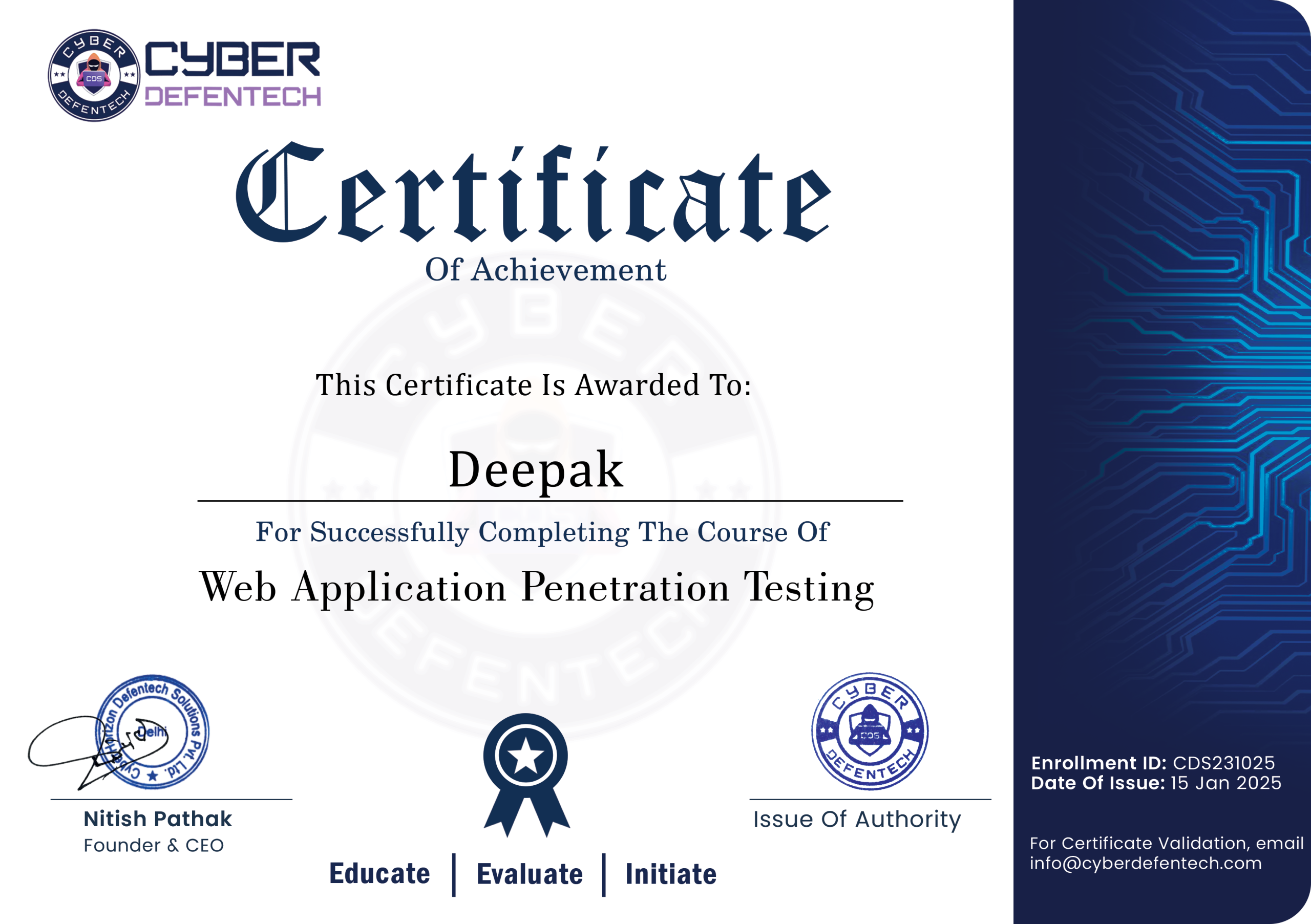
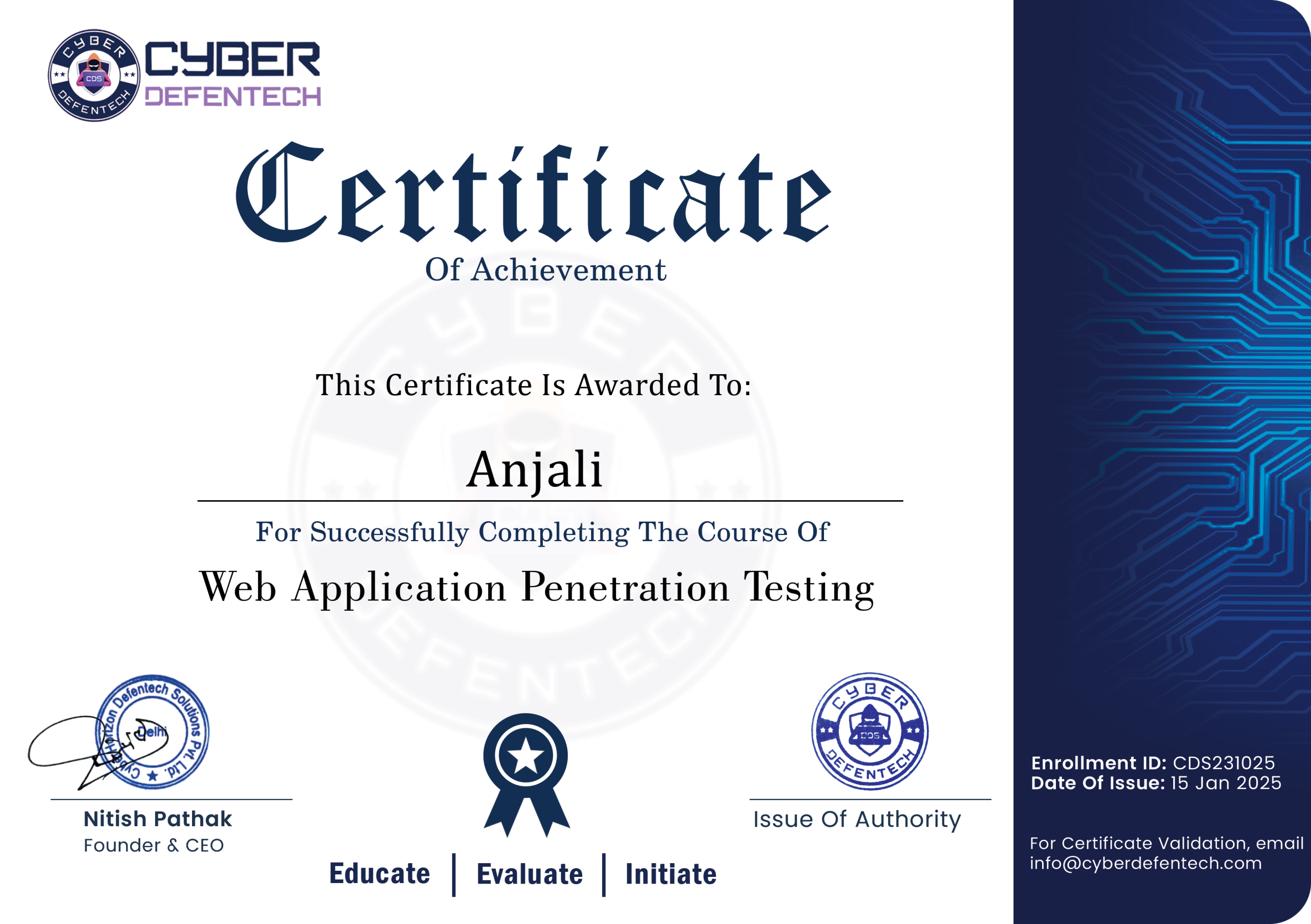
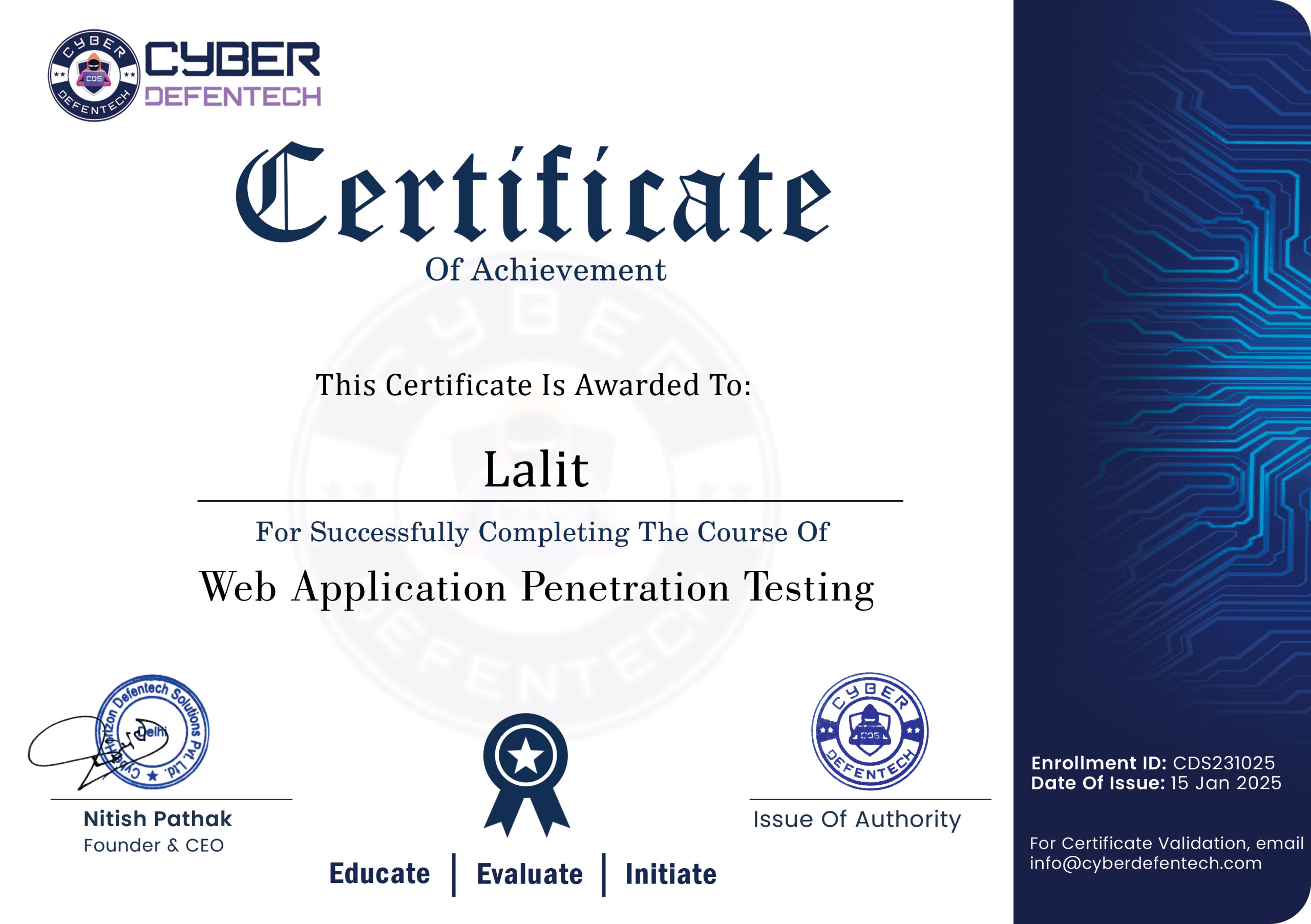
Our Students Theory Certification

FAQ

ChatGPT said:

Web Application Penetration Testing is the process of testing a web application to identify and exploit security vulnerabilities that an attacker could use to gain unauthorized access, steal data, or take control of the system. It is a type of ethical hacking focused specifically on websites and web-based systems.

During this testing, ethical hackers simulate real-world attacks on the application to discover flaws such as SQL Injection, Cross-Site Scripting (XSS), Cross-Site Request Forgery (CSRF), authentication bypass, insecure file uploads, and misconfigured servers. The goal is to find these issues before a malicious hacker can exploit them and then report them to the development or security team so they can be fixed.

Web application penetration testing follows a structured process that includes information gathering, threat modeling, vulnerability scanning, manual exploitation, and reporting. It plays a vital role in securing modern websites, especially those that handle sensitive data like personal information, passwords, or payment details.

โœ… Prerequisites for Web Application Penetration Testing (WAPT) After 12th:

  1. Basic Computer Knowledge
    You should be comfortable using computers, installing software, and working with files and browsers.

  2. Understanding of Web Technologies

    • Basic knowledge of how websites work

    • Familiarity with HTML, CSS, JavaScript

    • Understanding of client-server architecture

  3. Fundamentals of Networking

    • Basic concepts of IP addresses, DNS, HTTP/HTTPS, ports

    • How data travels over the internet

  4. Operating System Knowledge

    • Basic usage of Linux and Windows

    • Terminal/Command line usage (especially on Linux)

  5. Cybersecurity Basics (optional but helpful)

    • Basic understanding of cyber threats, security principles, and ethical hacking concepts

The objectives of a Web Application Penetration Testing (WAPT) course are to teach students how to detect, exploit, and fix vulnerabilities in web-based applications. The course is designed to build both theoretical knowledge and hands-on skills needed to protect websites from cyber threats.

A Web Application Penetration Testing (WAPT) course covers a wide range of topics that equip learners with the skills to identify, exploit, and secure vulnerabilities in web applications. Here's a breakdown of the core topics typically included:

๐Ÿง  Fundamentals & Basics

  • Introduction to Web Application Security

  • HTTP/HTTPS Protocols & Web Architecture

  • Client-Server Model

  • OWASP Top 10 Overview (common security risks)

๐Ÿ” Information Gathering & Reconnaissance

  • Target Enumeration (WHOIS, DNS, etc.)

  • Identifying entry points and technologies

  • Passive and Active information gathering

๐Ÿ› ๏ธ Vulnerability Discovery

  • Input validation & parameter tampering

  • Cookie & session handling issues

  • Authentication and authorization flaws

๐Ÿ’ฃ Exploitation Techniques

  • SQL Injection (SQLi)

  • Cross-Site Scripting (XSS) โ€“ Stored, Reflected, DOM-based

  • Cross-Site Request Forgery (CSRF)

  • Command Injection

  • File Inclusion (LFI/RFI)

  • Insecure File Upload

  • Broken Authentication

  • Broken Access Control

  • Security Misconfigurations

๐Ÿ”ง Testing Tools & Platforms

  • Burp Suite (core tool)

  • OWASP ZAP

  • SQLmap

  • Nmap

  • Nikto

  • Postman (API Testing)

  • Kali Linux Tools

๐Ÿงช Advanced Testing

  • Testing APIs (REST, GraphQL)

  • Bypassing Web Application Firewalls (WAFs)

  • Business Logic Testing

  • Automated vs. Manual Testing

๐Ÿ“‘ Reporting & Remediation

  • Writing Professional Vulnerability Reports

  • Risk Ratings (CVSS)

  • Remediation Techniques

  • Communicating with Developers and Stakeholders

๐Ÿงฐ Hands-on Labs & Challenges

  • Realistic web app targets (like DVWA, Juice Shop, BWAPP)

  • Capture the Flag (CTF) exercises

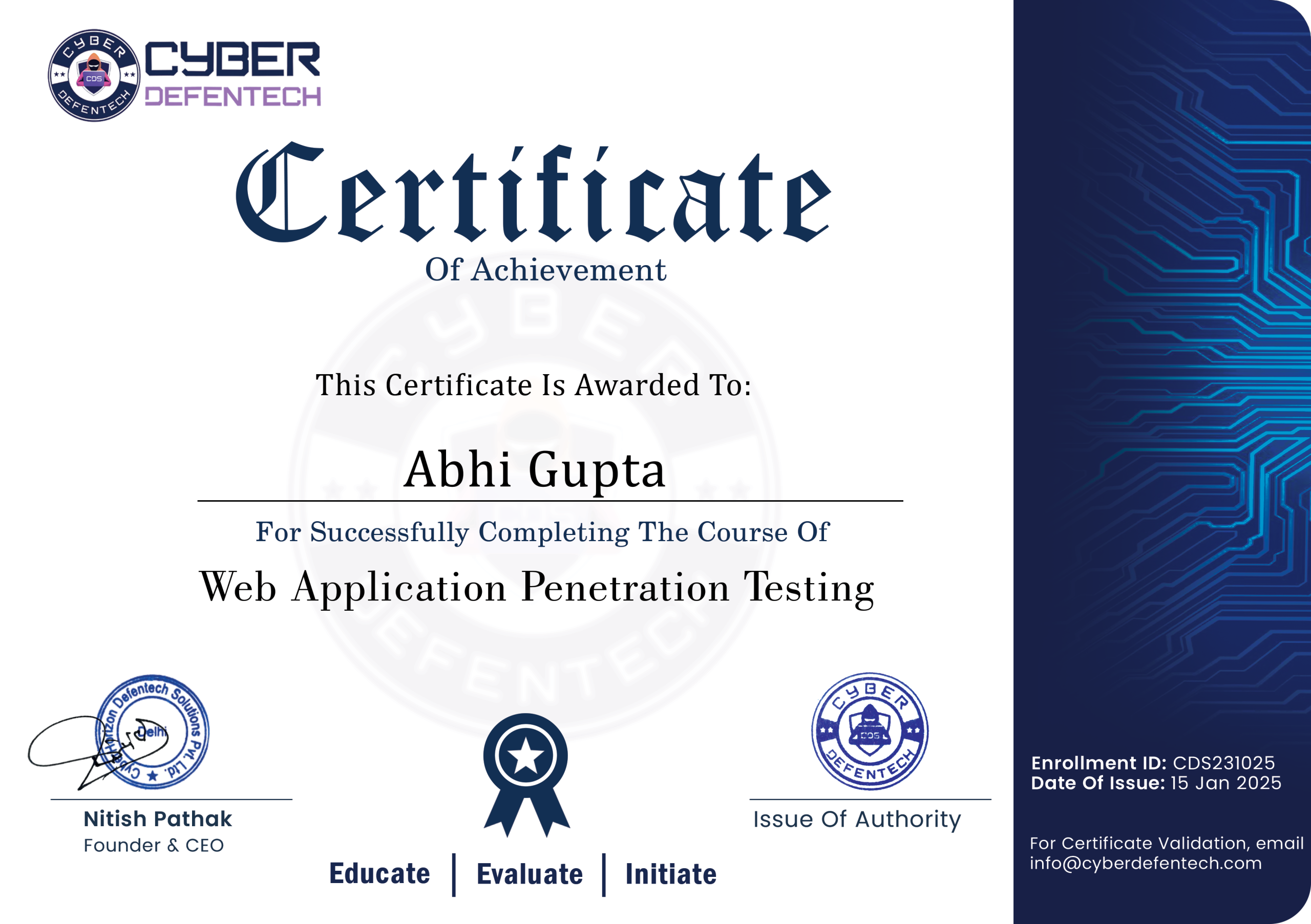
Yes, certification is typically available after completing a Web Application Penetration Testing (WAPT) course โ€” especially if the course is offered by a recognized training provider or cybersecurity institute.

The job market for Web Application Penetration Testing is strong and growing rapidly due to the increasing number of web-based applications and rising cybersecurity threats. Organizations across all industries are investing in application security to protect their data, making web app penetration testers highly sought-after professionals.

Choose Your Preferred Learning Mode

Related Cyber Security Course

Blogs