Master the industry-relevant Network Penetration Testing Training and Certification Course at Cyber Defentech Institute in Delhi. Gain in-depth knowledge of ethical hacking and advanced penetration testing techniques, including AI-integrated methodologies, guided by our expert instructors. Our faculty brings real-world experience to ensure practical, mentorship-driven learning aligned with the latest cybersecurity standards.
Experience hands-on, classroom-based training with cutting-edge tools, technologies, and software. The comprehensive course covers all essential aspects of network security and vulnerability assessment — empowering you to identify, exploit, and secure network infrastructures with a strong focus on emerging AI-driven threats.
Network Penetration Testing is a simulated cyberattack performed on a computer network to evaluate its security. The goal is to identify vulnerabilities, weaknesses, and potential entry points that attackers could exploit. By conducting these controlled attacks, ethical hackers can uncover flaws in firewalls, routers, switches, servers, and other network components.
This process helps organizations strengthen their security posture by fixing issues before malicious hackers can exploit them. Network penetration testing is a key part of any cybersecurity strategy, ensuring that systems, data, and communications remain secure against evolving cyber threats.

If you’ve completed your 12th grade and are interested in pursuing a Network Penetration Testing course, here are the common prerequisites:
Basic Computer Knowledge: Understanding of computer hardware, software, and general IT concepts is essential.
Familiarity with Operating Systems: Knowing how to use Windows and Linux systems is helpful, as penetration testing often involves both platforms.
Understanding of Networking Fundamentals: Basic knowledge of networking concepts like IP addresses, TCP/IP, routers, and firewalls is important.
Interest in Cybersecurity: A strong curiosity about how systems work and how to protect them is key to succeeding in this field.
No Formal Degree Required: While a degree isn’t necessary, having a background in science or IT from your 12th-grade stream (e.g., PCM or computer science) can be advantageous.
Willingness to Learn Programming (Optional but Helpful): Basic understanding of programming languages like Python, Bash, or JavaScript can be beneficial but is not mandatory at the entry level.
Most institutes, including Cyber Defentech in Delhi, offer beginner-friendly training that starts from the fundamentals, so even students fresh out of 12th grade can build a strong foundation in ethical hacking and network security.
A Network Penetration Testing course is designed to equip students with the skills and knowledge required to assess and secure computer networks. The main objectives of the course include:
Understanding Network Vulnerabilities
Learn to identify common weaknesses and misconfigurations in network devices, systems, and protocols.
Mastering Penetration Testing Tools and Techniques
Gain hands-on experience with industry-standard tools like Nmap, Metasploit, Wireshark, and Burp Suite.
Conducting Realistic Attack Simulations
Perform ethical hacking exercises that simulate real-world cyberattacks to test the strength of network defenses.
Learning Network Scanning and Enumeration
Understand how to gather information about network systems, open ports, services, and active devices.
Exploiting Network Vulnerabilities
Practice exploiting identified weaknesses to demonstrate potential risks and impacts.
Implementing Security Measures
Learn how to recommend and apply effective countermeasures to protect against network-based threats.
Understanding Legal and Ethical Aspects
Understand the legal boundaries and ethical responsibilities of penetration testing.
Preparing for Industry Certifications
Build a solid foundation to pursue advanced cybersecurity certifications like CEH, OSCP, or CompTIA Security+.
Reporting and Documentation
Learn to document findings, create detailed penetration testing reports, and communicate risks to stakeholders.
By the end of the course, students are prepared to perform professional network security assessments and contribute to protecting digital infrastructures against cyber threats.
A Network Penetration Testing course provides in-depth training across various cybersecurity domains to help learners understand and test the security of network infrastructures. Below are the key topics typically covered:
Introduction to Ethical Hacking
Overview of cybersecurity concepts
Types of hackers and cyber threats
The penetration testing process and methodologies
Networking Fundamentals
TCP/IP, OSI model, and IP addressing
Network protocols (HTTP, DNS, FTP, etc.)
Firewalls, switches, and routers
Reconnaissance and Footprinting
Passive and active information gathering
WHOIS, DNS queries, Google hacking
Social engineering basics
Network Scanning and Enumeration
Scanning with Nmap and advanced techniques
Identifying live hosts, open ports, and services
Banner grabbing and OS fingerprinting
Vulnerability Assessment
Vulnerability scanners (Nessus, OpenVAS)
Identifying known vulnerabilities in systems and services
Exploitation Techniques
Exploiting network services
Man-in-the-Middle (MITM) attacks
Denial of Service (DoS) attacks
Password Attacks
Brute force, dictionary, and rainbow table attacks
Password cracking tools (Hydra, John the Ripper)
Wi-Fi and Wireless Attacks
Cracking WEP/WPA/WPA2 encryption
Rogue access points and evil twin attacks
Firewall and IDS/IPS Evasion
Techniques to bypass security defenses
Tunneling, spoofing, and encryption tactics
Web Application Penetration Basics
Common web vulnerabilities (SQLi, XSS, CSRF)
Burp Suite and OWASP Top 10 overview
Post-Exploitation and Privilege Escalation
Maintaining access and privilege escalation techniques
Lateral movement across networks
Penetration Testing Tools
Metasploit Framework
Wireshark, Nikto, Netcat, and more
Reporting and Documentation
Writing professional penetration testing reports
Risk rating and security recommendations
AI Integration in Penetration Testing (Advanced Courses)
Using AI/ML tools for threat detection and response
Automation of reconnaissance and vulnerability analysis
These topics provide both theoretical understanding and practical skills necessary to assess and secure real-world network environments.
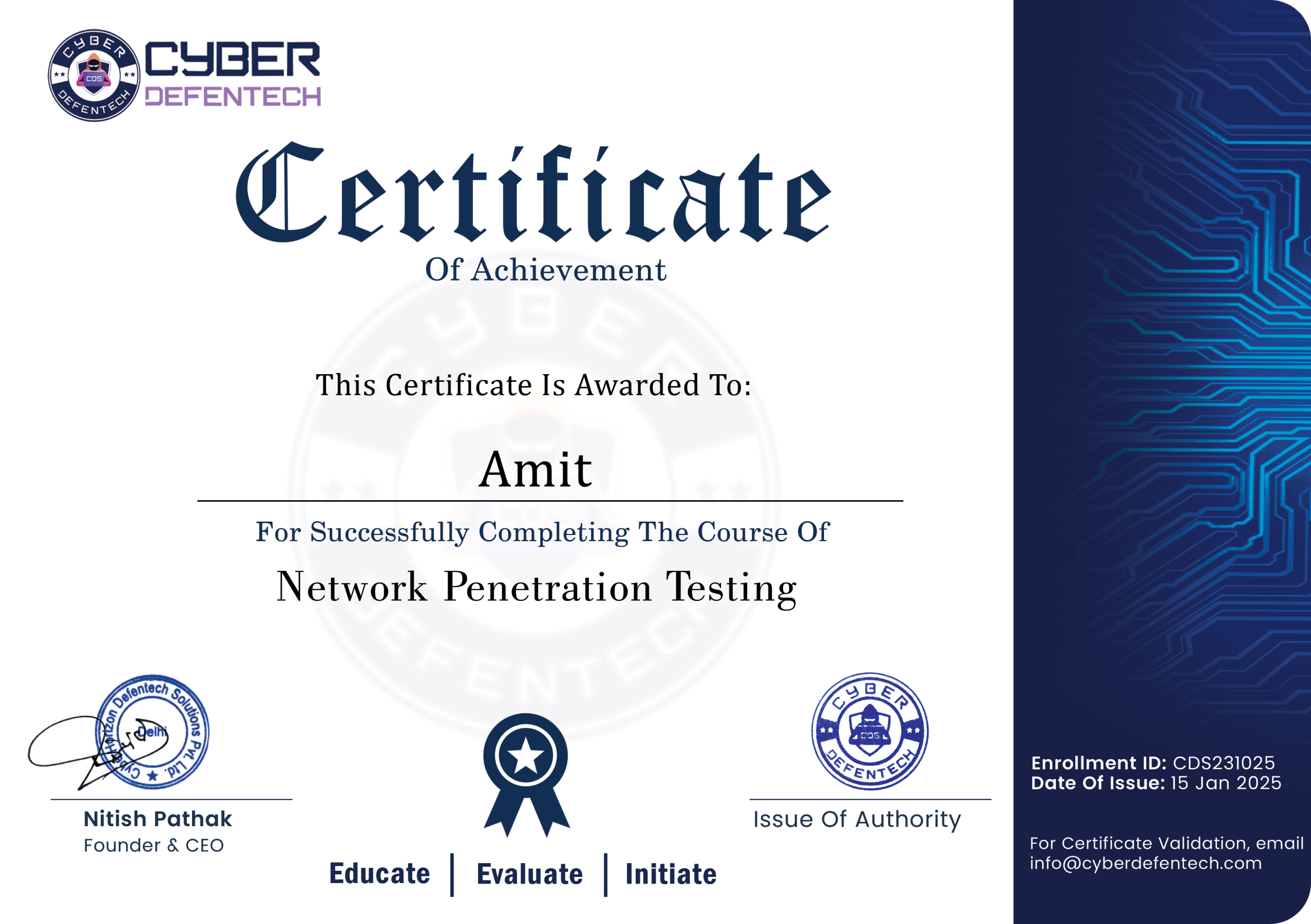
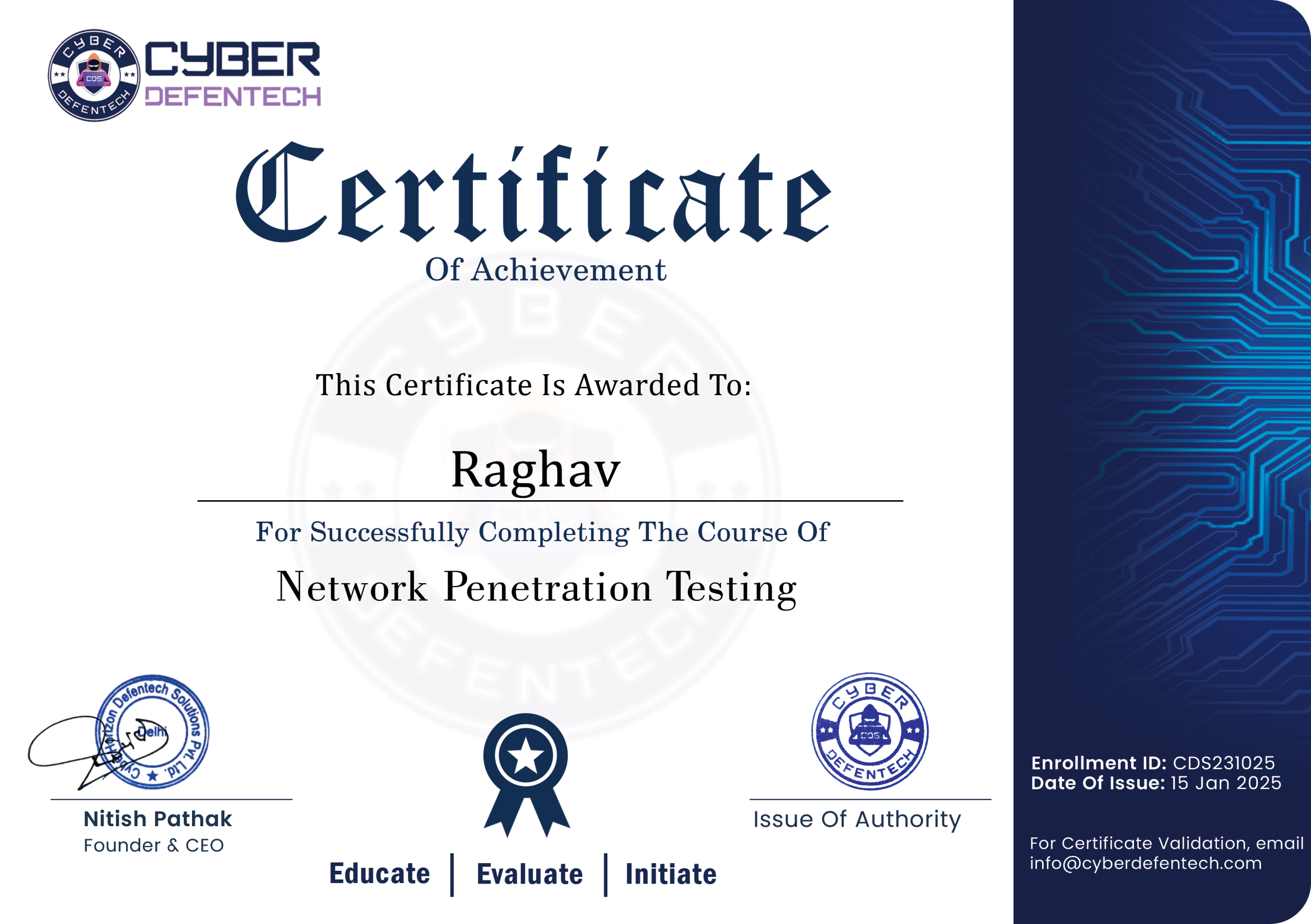
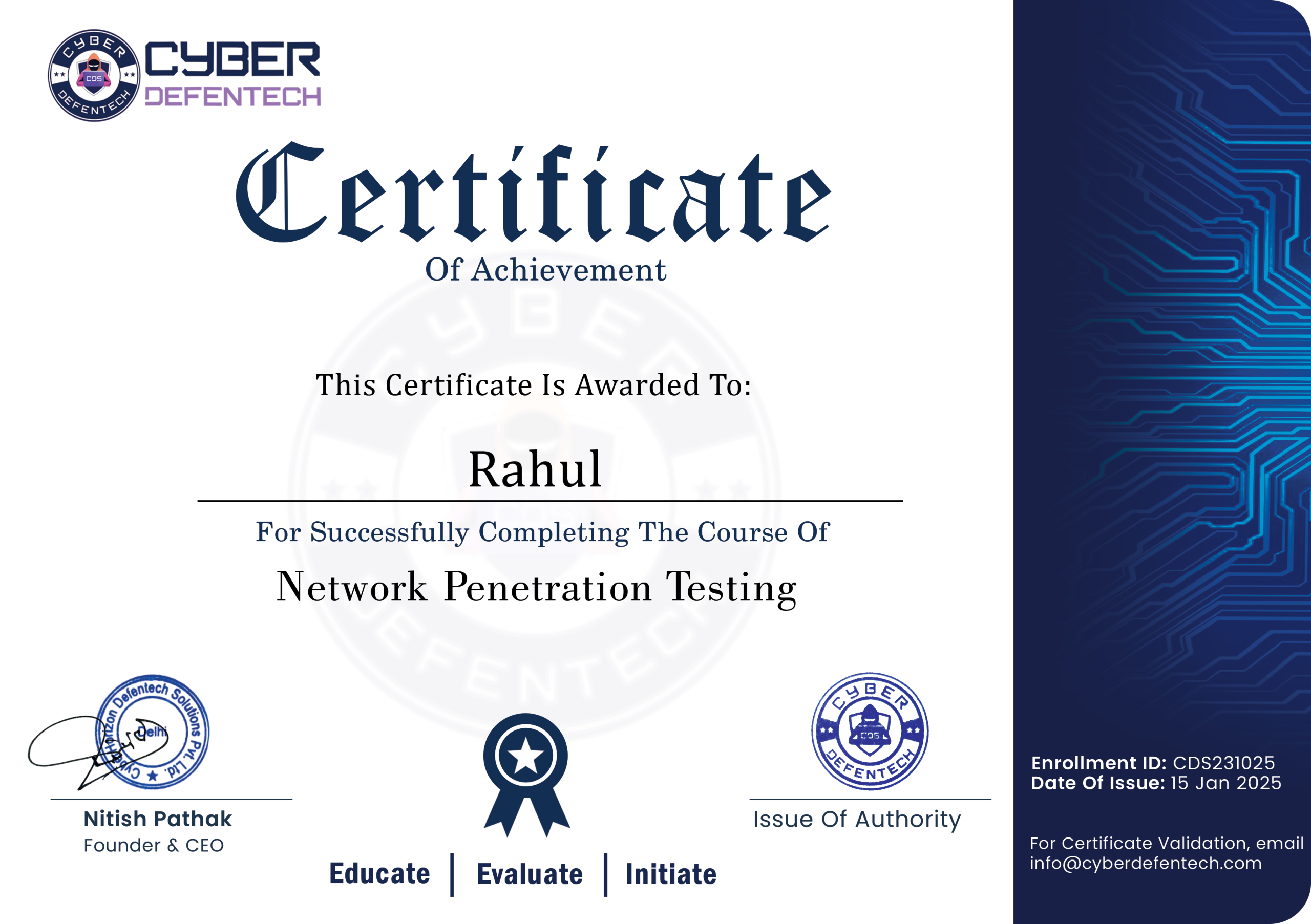
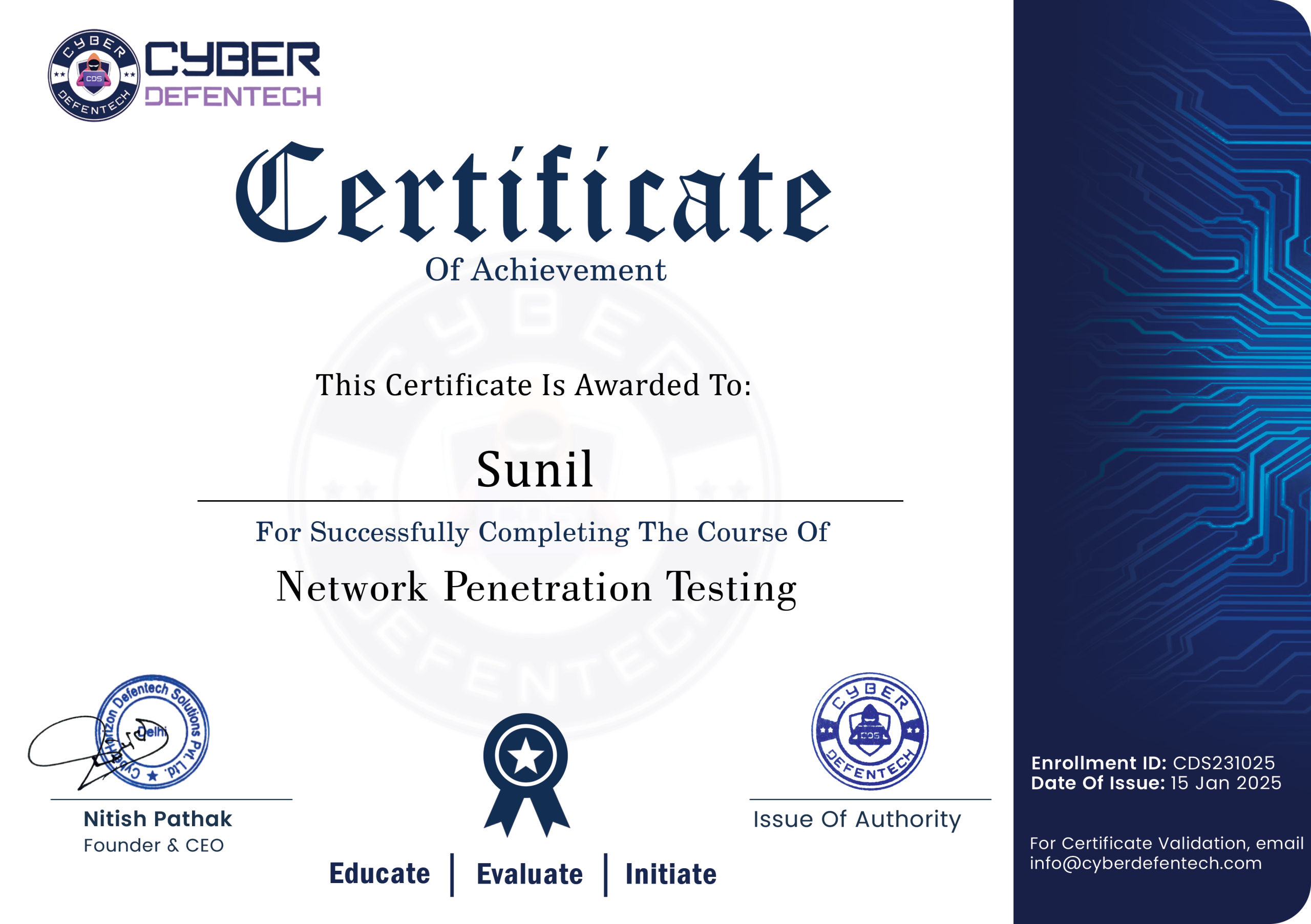
Yes, most Network Penetration Testing courses offer a certificate of completion after successfully finishing the training. This certification validates your skills and knowledge in network security and ethical hacking practices.
Additionally, completing such a course can also prepare you for industry-recognized cybersecurity certifications, such as:
CEH (Certified Ethical Hacker) – Offered by EC-Council, it’s one of the most popular certifications in ethical hacking.
CompTIA Security+ / CompTIA PenTest+ – Vendor-neutral certifications covering core security and penetration testing skills.
OSCP (Offensive Security Certified Professional) – A hands-on advanced certification in penetration testing.
eJPT (eLearnSecurity Junior Penetration Tester) – A beginner-friendly certification with practical labs.
CPENT (Certified Penetration Testing Professional) – An advanced certification from EC-Council focused on network and application-level attacks.
At Cyber Defentech Institute in Delhi, students receive a course completion certificate and mentorship to help them prepare for global certifications, enhancing their credibility and career opportunities in cybersecurity.
What Is the Job Market for Network Penetration Testing?
The job market for Network Penetration Testing is growing rapidly as organizations around the world prioritize cybersecurity to protect their digital assets. With the increasing number of cyberattacks, there is a high demand for skilled professionals who can identify and fix security vulnerabilities before they are exploited by attackers.
High Demand for Skills
Companies across industries — including finance, healthcare, IT, defense, and e-commerce — actively hire penetration testers and ethical hackers to strengthen their cybersecurity defenses.
Diverse Job Roles Available
Network Penetration Tester
Ethical Hacker
Security Analyst
Vulnerability Assessor
Cybersecurity Consultant
Red Team Specialist
Attractive Salary Packages
Entry-Level: ₹4.5 – ₹6 LPA (India) / $60,000 – $80,000 (US)
Mid-Level: ₹7 – ₹15 LPA / $90,000 – $120,000
Senior-Level: ₹18+ LPA / $130,000+
Global Career Opportunities
Certified penetration testers can work internationally or remotely with multinational companies, consulting firms, and government agencies.
Path to Specialization
With experience, professionals can move into specialized roles like:
Red Team/Blue Team Operations
Cyber Threat Hunting
Cloud Security Testing
AI-Driven Security Analysis
Growing Freelance and Consulting Options
Many certified professionals offer freelance or contract-based penetration testing services, often earning competitive rates.
WhatsApp us