Linux

Linux

Linux Course in Delhi | Cyber Defentech Linux Training

Master the industry-relevant Linux Training and Certification Course at Cyber Defentech Institute in Delhi. Gain in-depth knowledge of Linux operating systems, system administration, and server management — guided by our expert instructors. Our faculty brings real-world experience to provide practical, mentorship-driven learning aligned with the latest IT and cybersecurity industry standards.

Experience hands-on, classroom-based training with advanced tools, technologies, and real-time lab setups. This comprehensive course covers all essential aspects of Linux, from basic commands to advanced shell scripting, user management, file systems, and network configuration — empowering you to confidently manage Linux environments and pursue high-demand careers in IT, DevOps, and cybersecurity.

What I will learn?

  • Having 17 modules for better enhancement of skills including :
  • Linux distributions
  • Linux arguments
  • Linux tutorials
  • File permission
  • Package management
  • Basics commands
  • Shell scripting
  • Kernel concepts

Course Curriculum

Module 1: Introduction To Linux

Module 2: Linux File System

Module 3: Command-Line Interface (CLI)

Module 4: User And Group Management

Module 5: Package Management

Module 6: Process Management

Module 7: System Startup And Shutdown

Module 8: Networking Basics

Module 9: File And Directory Permissions

Module 10: Shell Scripting Basics

Module 11: Text Manipulation

Module 12: Text Editing With Vim Or Nano

Module 13: Remote Access SSH

Module 14: System Monitoring And Logging

Module 15: Backup And Restore

Module 16: Virtualization Basics

Module 17: Advanced Topics And Security

Our Students Theory Certification

FAQ

Linux is a free, open-source operating system based on UNIX. It acts as the core software that manages hardware resources and allows other programs to run on a computer. Like Windows or macOS, Linux provides a user interface and handles tasks such as file management, process control, and device management.

One of the key features of Linux is its open-source nature, meaning its source code is publicly available and can be modified or distributed by anyone. This has led to the creation of many different versions (called distributions) like Ubuntu, Fedora, Debian, Kali Linux, and CentOS, each designed for different needs.

Linux is widely used in servers, cybersecurity, programming, cloud systems, embedded devices, and even in smartphones (like Android, which is based on Linux). It is known for its stability, security, and performance, making it a popular choice for developers, system administrators, and ethical hackers.
There are no strict prerequisites for learning Linux after 12th, which makes it a great choice for students interested in IT, cybersecurity, or software development. However, having some basic skills and knowledge can help you get started more easily:

1. Basic Computer Knowledge

You should be comfortable using a computer—navigating folders, copying files, and installing software.

2. Understanding of Operating Systems

A basic idea of what an operating system does (like Windows) helps you understand Linux concepts more quickly.

3. Basic English Reading Skills

Since most Linux commands and manuals are in English, understanding basic instructions is important.

4. Interest in Technology

Curiosity about how computers work, how systems are managed, or how hackers operate can motivate learning Linux deeply.

The main objectives of a Linux course are to equip learners with the knowledge and skills needed to understand, use, and manage the Linux operating system effectively. The course aims to build a strong foundation in using the Linux command line, managing files and directories, installing and configuring software, and understanding the Linux file system and user permissions.

It also focuses on teaching how to handle system administration tasks, such as managing users, processes, services, and networking configurations. For those pursuing cybersecurity or server management, the course may also cover Linux security basics, shell scripting, and working with Linux-based servers. Overall, the goal is to make learners confident in using Linux for personal, academic, or professional purposes, including careers in IT support, system administration, ethical hacking, and DevOps.

The job market for ethical hackers is strong and growing rapidly, driven by the increasing threat of cyberattacks and the need for skilled cybersecurity professionals. Organizations across the globe—including IT companies, banks, government agencies, defense sectors, and startups—are hiring ethical hackers to identify and fix security weaknesses before malicious hackers can exploit them.

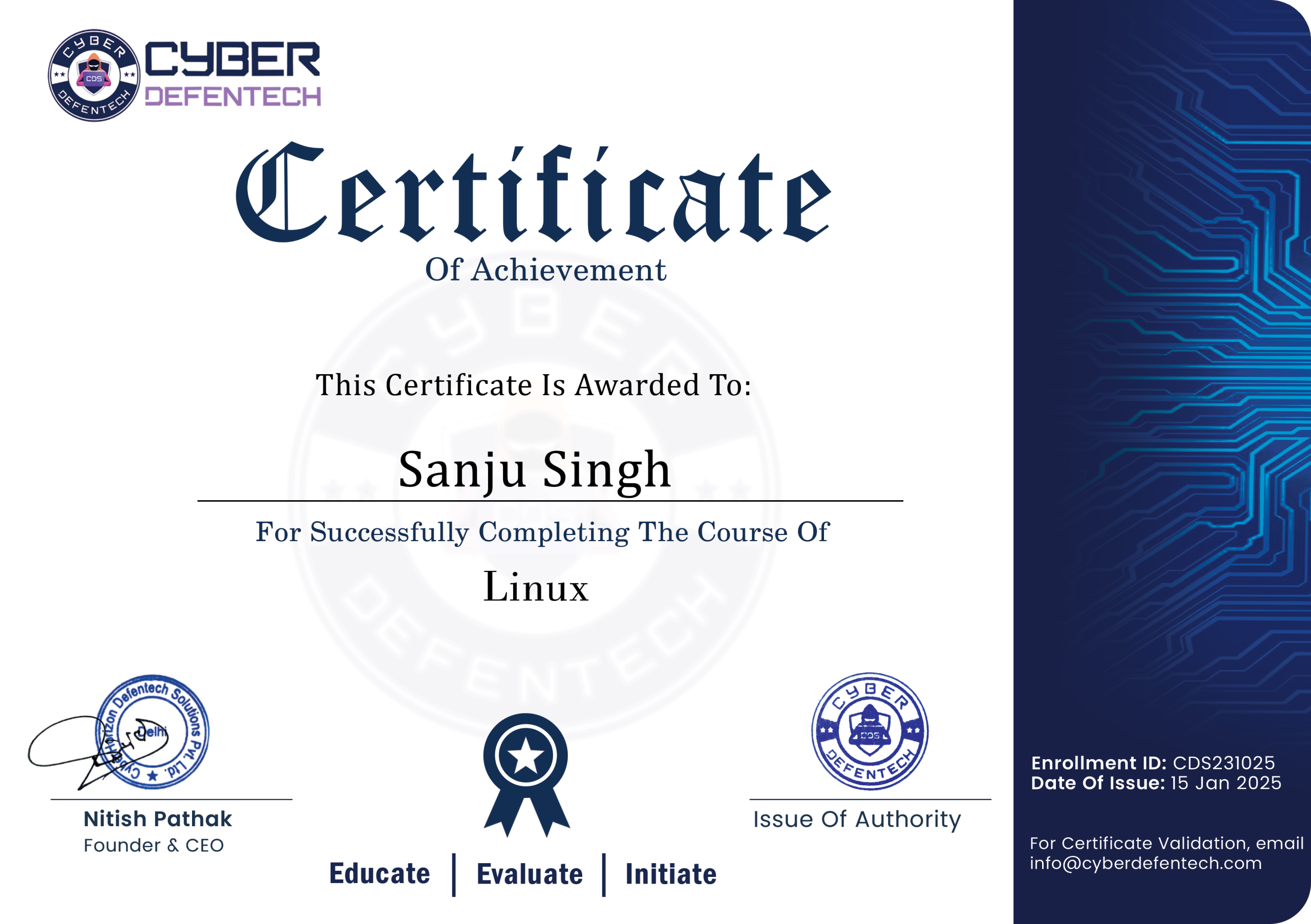
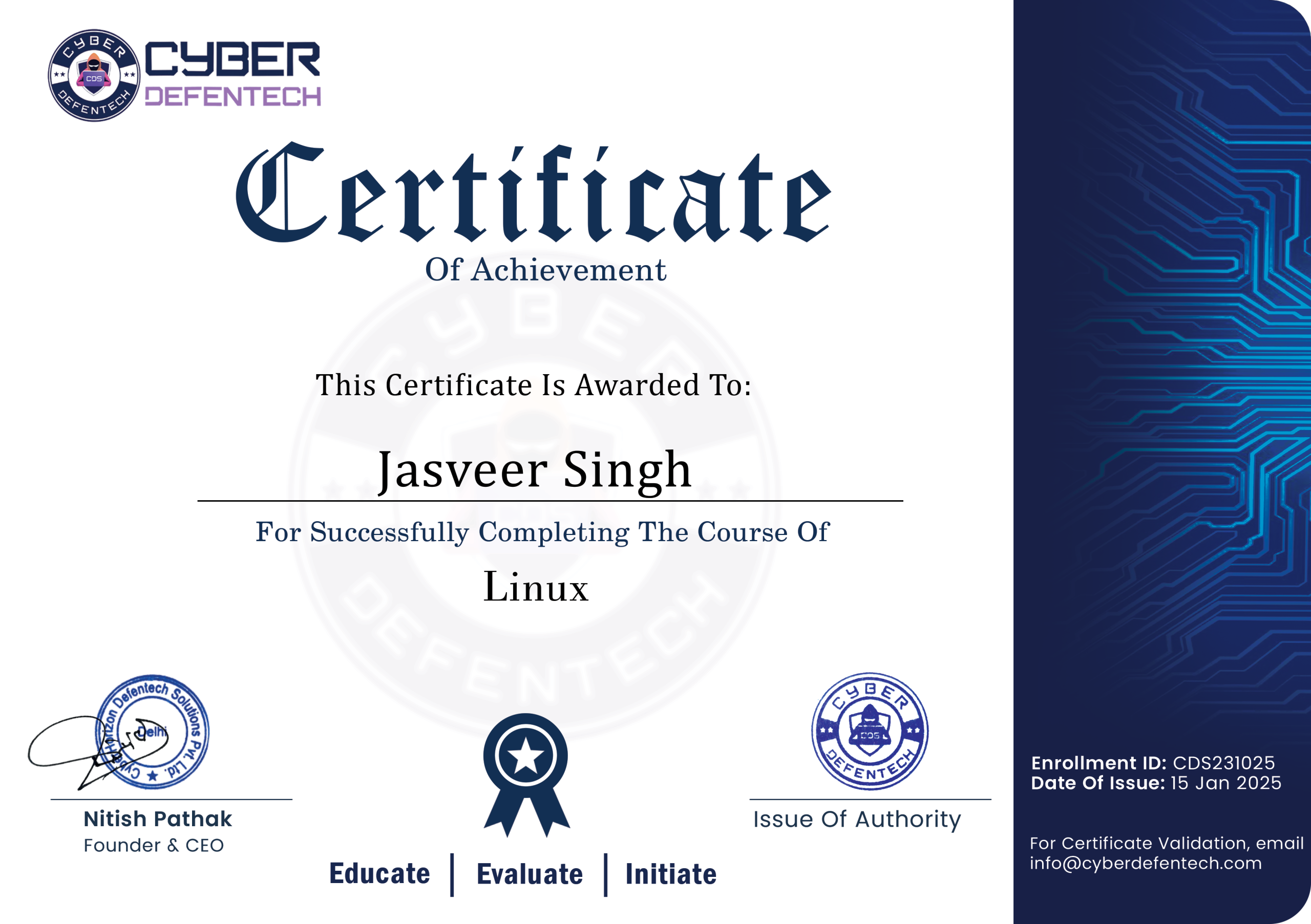
Yes, certification is available after completing a Linux course. Many training institutes, online platforms, and organizations offer certificates of completion to learners who finish their course and pass the required assessments or projects.

The job market for Linux professionals is strong and continuously growing, especially in fields like IT infrastructure, cloud computing, cybersecurity, DevOps, and system administration. Since Linux powers a majority of the world’s servers, supercomputers, cloud platforms, and cybersecurity tools, companies across the globe actively seek individuals skilled in Linux.

Choose Your Preferred Learning Mode

Related Cyber Security Course

Blogs