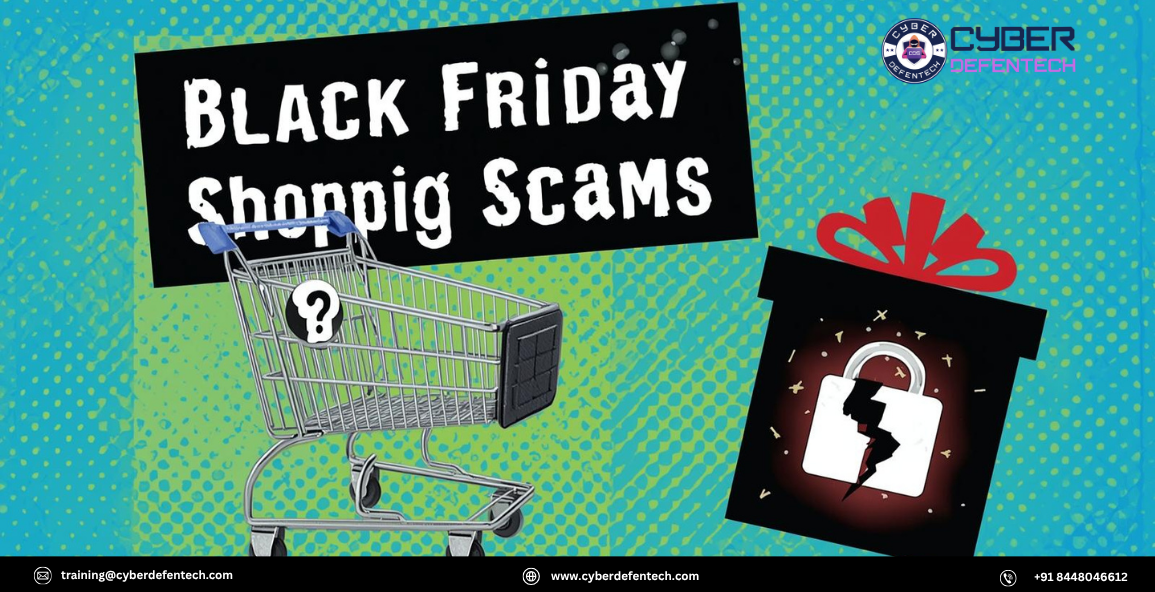
Black Friday Scams Protection is more critical than ever in 2025. As November and December bring waves of Black Friday and holiday sales, online shoppers rush to grab massive discounts — but cybercriminals are equally active, waiting to strike. This period has become the prime time for online scams, where fraudsters exploit the shopping chaos using AI-generated deepfakes, fake shopping websites, phishing campaigns, and social engineering traps.
Recent cybersecurity reports reveal that scam websites have surged dramatically, and phishing attacks now dominate nearly half of all Black Friday threats. From cloned brand pages to fraudulent QR codes and deepfake influencer ads, the digital shopping landscape has never been more dangerous.
With excitement and urgency driving impulsive clicks, it’s crucial for shoppers to recognize the signs of fraud and adopt smart Black Friday scams protection strategies to stay safe this season.
Why Black Friday Scams Protection Matters ?
With transaction volumes exploding during the holiday shopping boom, cyber-criminals know that urgency lowers vigilance. They exploit rushed purchases, big discounts and reduced scrutiny to harvest personal data, financial credentials and even cryptocurrency assets at an unprecedented scale. According to the latest research, holiday-themed phishing and spoof sites have surged dramatically.
10 Most Prevalent Black Friday Scams Targeting Shoppers :
1. Fake Shopping Websites & Spoofed Domains
Scammers build counterfeit stores that mimic top retailers—cloned logos, identical layouts, slight domain tweaks like “be5tbuy.com” instead of “bestbuy.com”. Once payment details are entered, identity theft begins. Key red flags: misspelled URLs, no HTTPS, unrealistic discounts, missing “About/Contact” pages.
(Example: threat actors using domains with .shop, .vip, .store top-levels.)
2. Phishing & Smishing Campaigns
Fraudulent emails and SMS messages impersonate trusted retailers, banks or delivery services. They create urgency—“Only 10 minutes left to verify your account”—leading recipients to credential-harvesting sites. Phishing alone accounts for a major portion of Black Friday threats.
3. QR Code Fraud (Quishing)
Attackers place or overlay malicious QR codes in emails, posters or even parking-meters. A scan takes you to malware sites or phishing pages. Red flags include unsolicited QR codes, urgent scanning requests for a “deal”, or physical codes that look tampered with.
4. AI-Powered Deepfake Scams
Thanks to AI, cybercriminals can generate near-perfect videos and audio of celebrities or CEOs endorsing fake deals. In one case, a retailer lost thousands of records after a deepfake CEO announced a “giveaway app”. If you see a deal endorsed by a celebrity but not on the official channel, it’s suspect.
5.Fake Social Media Advertisements
On platforms like Instagram, TikTok and Facebook, fraudsters run ads mimicking legit brands with deep discounts. They use stolen branding, bot reviews, and link you to counterfeit stores. Red flags: unverified seller accounts, ultra-low prices (70–90% off), and urgency to buy now.
6. Fake Delivery Notifications
With high volumes of expected parcels around Black Friday, scammers impersonate carriers (USPS, DHL, FedEx) with fake tracking links. These links lead to phishing sites or malware. Watch for delivery notices for parcels you never ordered, or requests to pay for “final delivery”.
7. Counterfeit Products & Marketplace Fraud
Fraudsters list high-demand branded goods at unrealistic prices on marketplaces (eBay, Facebook Marketplace). Either the items never arrive or they’re poor-quality fakes. Look out for large discounts, sellers with no history, and requests outside the platform’s payment system.
8. Gift Card Scams & Fake Vouchers
Scammers push free or heavily-discounted gift card offers via email/social media, or claim to provide “generators” of vouchers. Instead, these sites install clipboard‐monitoring malware or send you fake codes. Red flags: paying with gift cards, winning contests you didn’t enter, offers from unofficial sources.
9. Fake Charity & Donation Scams
Holiday goodwill is exploited with fake charity campaigns. Scammers create emotional appeals and professional sites, but the donations go nowhere. The Federal Trade Commission reports significant upticks in charity scams during December. Red flags: unsolicited donation requests, vague fund use, inability to verify with watchdogs.
10. Cryptocurrency Payment Scams
Some fraudulent stores ask for crypto-only payments, promising “exclusive discounts”. Once the crypto is sent—gone. Other scams: wallet-credential phishing, fake investment “returns” tied to Black Friday hype, apps that scan your photo library for recovery phrases. Red flags: sudden crypto-only acceptance, guaranteed returns, apps requesting photo access with no reason.
Multi-Layered Defense: How to Detect & Avoid Black Friday Scams !
- Check the URL & Domain Age
Hover over links, watch for misspellings or odd extensions (.top, .vip). Use WHOIS look-ups to verify when the domain was created—domains under six months old carry higher risk. - HTTPS, Website Quality & Contact Info
Look for the padlock icon, verify the certificate. Inspect site quality—typos, low-res images or missing contact info are red flags. Legit sites provide full “Contact Us” details. - Review Prices & Payment/Return Policies
If a discount seems too good, compare with other retailers. Check payment options and returns—avoid sites that only accept wire transfers or crypto. - Use Strong Authentication & Virtual Cards
Enable two-factor authentication on shopping accounts. Use credit cards or virtual cards for better liability protection. Avoid using debit cards when possible. - Research Before You Click or Donate
Search “[site name] + scam” or check reviews on independent platforms. For donations, verify charities via watchdogs like CharityWatch. - Trust Your Instincts
If something feels off—timepressured, overly generous, or unsolicited—it likely is. Walk away.
Conclusion:
“Black Friday Scam Protection” isn’t just a buzz-phrase—it’s a necessity for the 2025 holiday season. With fraudsters leveraging AI, deepfakes and social engineering at scale, the threat landscape has never been tougher. But by recognising the ten prevalent scams and using layered detection strategies, you can shop with confidence and protect your finances and data. Vigilance, verification and scepticism are your best allies. Stay alert—and happy (and safe) deal hunting!
About Cyber Defentech :
Cyber Defentech is a leading cybersecurity training and awareness institute dedicated to empowering individuals with real-world cyber defense skills.
Visit cyberdefentech.in or contact us at +91 8448046612 for expert-led courses and training programs.
📢 Want to stay updated on the latest scams, frauds, and cybersecurity insights?
Follow Cyber Defentech for more informative articles and awareness updates. Stay smart. Stay secure.
