A Deep Dive into Cyber Threats
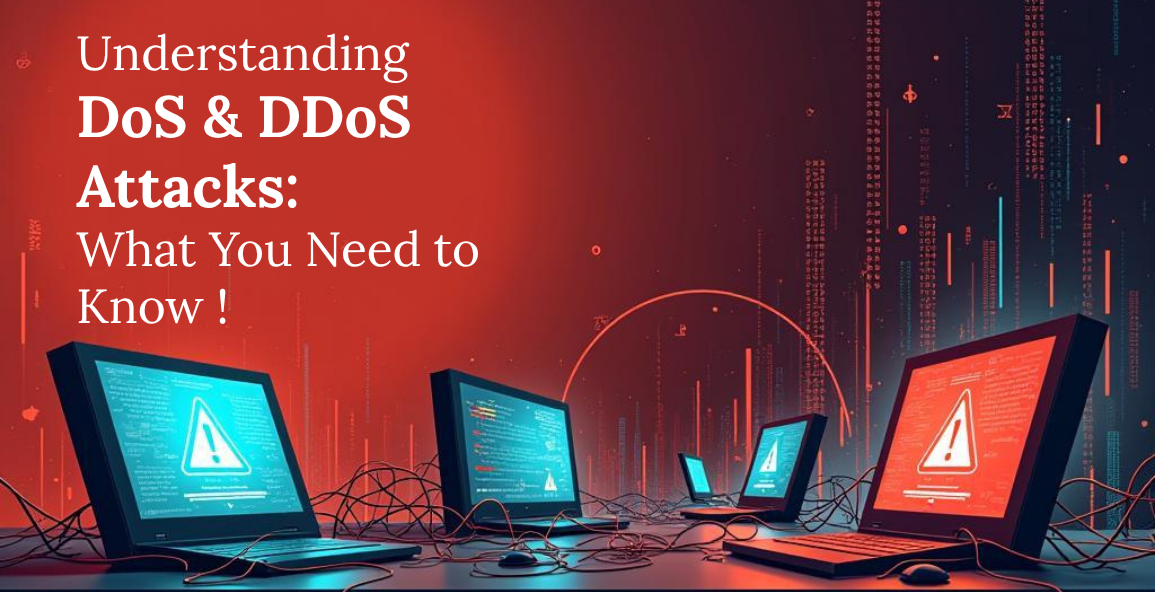
In the ever-evolving landscape of cybersecurity, two terms frequently surface in discussions of network threats: Denial-of-Service (DoS) and Distributed Denial-of-Service (DDoS) attacks. These attacks are among the most disruptive and dangerous types of cyber incidents that can cripple businesses, governments, and even entire sections of the internet. While both aim to make online services unavailable, they differ in scale, execution, and potential impact.
This article explores the concepts of DoS and DDoS attacks in detail, including how they work, their types, methods of detection, prevention strategies, and real-world case studies.
What is a Denial-of-Service (DoS) Attack?
A Denial-of-Service (DoS) attack is a malicious attempt to make a computer, server, or network resource unavailable to its intended users. This is typically achieved by overwhelming the target with a flood of unnecessary or fake requests, causing it to slow down, crash, or become unresponsive.
Key Characteristics:
Single source: Originates from one machine or network.
Intentional overload: Bombards systems with traffic or exploits vulnerabilities.
Temporary disruption: Aims to interrupt services, not necessarily to breach data.
DoS attacks do not involve multiple systems or complex command-and-control structures, making them simpler but still harmful.
What is a Distributed Denial-of-Service (DDoS) Attack?
A Distributed Denial-of-Service (DDoS) attack is an advanced form of DoS where the attack originates from multiple systems, often distributed across different geographic locations. These attacks are typically coordinated through botnets (networks of infected devices) controlled by the attacker.
Key Characteristics:
Multiple sources: Utilizes hundreds or thousands of devices.
Harder to trace: Due to widespread distribution.
Greater impact: Capable of taking down large-scale infrastructure.
DDoS attacks are significantly more difficult to mitigate than simple DoS attacks because of their scale and the challenge of distinguishing malicious traffic from legitimate requests.
Types of DoS and DDoS Attacks :
There are several categories of DoS and DDoS attacks, classified based on the method used to disrupt services:
1. Volume-Based Attacks
These attacks consume the target’s bandwidth with a massive amount of data traffic.
UDP Floods Attacks: Attacker sends large numbers of User Datagram Protocol packets to random ports.
ICMP Floods Attacks: Attacker sends huge volumes of Internet Control Message Protocol packets & consuming bandwidth.
Ping of Death Attacks: Attacker sends oversized ping packets which crashing the target system.
2. Protocol Attacks
These exploit weaknesses in the protocol stack.
SYN Flood Attack: Exploits the TCP handshake by sending repeated SYN requests without completing the handshake.
Smurf Attack Attack: Sends ICMP requests with spoofed IPs, causing responses to flood a victim.
Ping Flood Attack: Saturates the target with ICMP echo requests.
3. Application Layer Attacks
These focus on disrupting specific applications rather than infrastructure.
HTTP Flood Attack: Overwhelms a web server with HTTP requests.
Slowloris: Sends partial HTTP requests, holding connections open indefinitely.
DNS Query Flood: Overloads the DNS service with fake requests.
How DoS and DDoS Attacks Work?
DoS Attack Mechanism:
The attacker identifies a vulnerable target.
The attacker sends a flood of requests to the target system.
The target becomes overloaded and fails to respond to legitimate users.
DDoS Attack Mechanism:
The attacker creates a botnet using malware to infect devices.
The attacker sends commands to the botnet via a command-and-control server.
The botnet launches a coordinated attack on the target.
The overwhelming traffic renders the service inoperable.
Motives Behind DoS and DDoS Attacks:
Understanding the motives can help organizations assess their risk exposure.
Hacktivism: To protest against organizations or governments.
Financial gain: Extortion (e.g., ransomware), targeting competitors.
Revenge: insider employees or customers.
Political reasons: Cyberwarfare between nations.
Testing security: For showcasing vulnerabilities.
Impact of DoS and DDoS Attacks:
The damage caused by these attacks can be substantial, both in immediate disruption and long-term consequences.
1. Downtime and Service Disruption
Websites or services become inaccessible.
Customers lose trust.
Sales and user activity plummet.
2. Financial Loss
E-commerce platforms can lose thousands or millions of dollars.
Cost of mitigation and response efforts.
Potential ransom payments.
3. Reputation Damage
Perception of weak security.
Lost customer loyalty and market share.
4. Operational Impact
Redirected resources for mitigation.
Delays in business operations.
Legal and compliance issues.
Famous DoS and DDoS Attacks:
1. GitHub Attack (2018)
One of the largest recorded DDoS attacks.
Peaked at 1.35 Tbps.
Exploited Memcached servers to stronger traffic.
2. Dyn DNS Attack (2016)
Brought down major websites like Twitter, Netflix, and Reddit.
Utilized the Mirai botnet made of IoT devices.
Exposed the vulnerability of centralized DNS services.
3. Estonia Cyberattacks (2007)
Targeted government, banking, and media websites.
Believed to be politically motivated.
Caused global discussion on cyberwarfare.
Detection of DoS and DDoS Attacks:
Detecting these attacks early is crucial for mitigation.
Indicators of a DoS/DDoS Attack:
Unusually slow network performance.
Unavailability of a particular website.
Increase in spam emails.
Logs showing repetitive patterns.
Tools and Techniques:
Intrusion Detection Systems (IDS).
Firewalls and rate-limiting.
Traffic analysis software.
Behavioural analytics to distinguish normal from abnormal activity.
Prevention and Mitigation Strategies:
1. Rate Limiting
Restrict the number of requests a user can make in a given timeframe.
2. Web Application Firewalls (WAF)
Filter and monitor HTTP requests to prevent application-layer attacks.
3. Content Delivery Networks (CDNs)
Distribute traffic across servers, absorbing large volumes of data.
4. DDoS Protection Services
Providers like Cloudflare, Akamai, and AWS Shield offer specialized protection.
5. Anycast Network Routing
Distributes traffic across multiple servers and data centers globally.
6. Blackhole Routing
Traffic to the attacked IP is dropped or rerouted to null, minimizing impact on other systems.
7. Botnet Detection
Identify and block traffic from known infected sources using threat intelligence.
Ethical Considerations:
While DDoS attacks are illegal in most jurisdictions, some organizations and hackers attempt to justify them under the guise of protest or free speech. Regardless of motive, launching a DoS or DDoS attack is a criminal offense in many countries, punishable by hefty fines and imprisonment.
The Future of DoS and DDoS Threats:
As technology evolves, so do the tactics of cybercriminals. With the rise of IoT devices, 5G networks, and AI, DDoS attacks are becoming more sophisticated and damaging.
Emerging Trends:
AI-powered botnets: Self-learning malware that adapts to defenses.
IoT-based attacks: Exploiting weakly secured devices.
Multi-vector attacks: Combining different types of attacks for greater effect.
DDoS for hire services: Low-cost tools available on the dark web.
Conclusion :
DoS and DDoS attacks are more than just annoyance they represent significant threats to businesses, individuals, and governments. As the frequency and complexity of these attacks increase, so does the need for robust, proactive defenses.
Organizations must invest in resilient infrastructure, adopt best practices for network security, and stay informed about the evolving threat landscape. While no system is entirely immune, awareness, preparation, and quick response can dramatically reduce the impact of a DoS or DDoS attack.