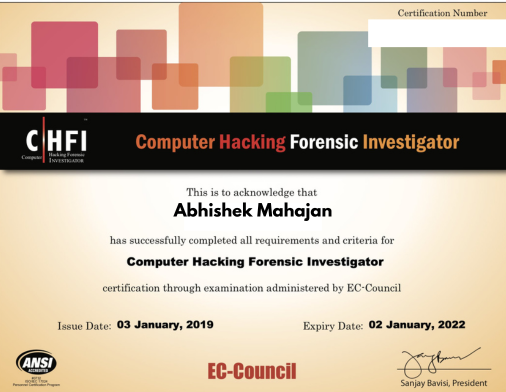
Master the globally recognized CHFI Training and Certification Course at Cyber Defentech Institute in Delhi.
Learn digital forensics from its core principles to advanced investigation techniques under the guidance of our highly experienced and specialized faculty, who deliver expert mentorship aligned with the official EC-Council CHFI (Computer Hacking Forensic Investigator) syllabus.
Now is the perfect time to take the leap and begin your journey toward becoming a skilled cyber forensics professional with the CHFI Training Course at Cyber Defentech Institute, Delhi.
This course is designed to help you master the essential concepts of computer forensics and cybercrime investigation, preparing you to handle real-world incidents involving data breaches, digital evidence recovery, and cyber law enforcement with confidence.


| Certification Name | CHFI (MCQ Exam) |
|---|---|
| Exam Format | - |
| Number of Questions | 150 Questions |
| Exam Duration | 4 Hours |
| Passing Score | 70% |
| Exam Delivery | ECC Exam Portal |
Penetration testing, also known as ethical hacking, is the process of evaluating a computer system, network, or web application to identify security vulnerabilities that could be exploited by attackers. While ethical hackers use the same tools and techniques as malicious hackers, their goal is to help organizations by discovering and reporting weaknesses so they can be resolved before being exploited.
Key Prerequisites for Enrolling in an Ethical Hacking Course: Basic knowledge of computer systems and networking fundamentals Practical experience with scripting languages like Bash, PHP, or Python Working understanding of common network protocols such as TCP/IP, HTTP, and FTP Familiarity with core security concepts, including authentication, authorization, and encryption Basic experience with multiple operating systems, including Windows, Linux, and macOS Awareness of popular ethical hacking tools like Metasploit, Nmap, and Wireshark Understanding of techniques such as social engineering and malware analysis used in ethical hacking
Main Objectives of Cyber Defentech Ethical Hacking Course: Understand the threats, risks, and mitigation strategies related to system and network security Gain hands-on experience with the tools and techniques used by hackers to compromise systems Identify vulnerabilities and weaknesses in computer systems and networks Learn how to detect, analyze, and report security flaws effectively Develop strong skills in performing professional penetration tests Explore the ethical and legal implications of hacking activities Prepare for industry-recognized ethical hacking certification exams
The Ethical Hacking Course Covers a Wide Range of Industry-Relevant Topics, Including: Introduction to Ethical Hacking Footprinting and Reconnaissance Network Scanning Enumeration System Hacking Malware Threats Sniffing Techniques Social Engineering Denial of Service (DoS) Attacks Session Hijacking Web Server and Web Application Hacking Wireless Network Hacking Cryptography Essentials Penetration Testing Methodologies Evading IDS, Firewalls, and Honeypots Buffer Overflow Exploits Vulnerability Exploitation Mobile Device Hacking Cloud Security Fundamentals Report Writing and Documentation For detailed guidance and enrollment assistance, feel free to contact our experienced education counselors at +91 84480 46612.
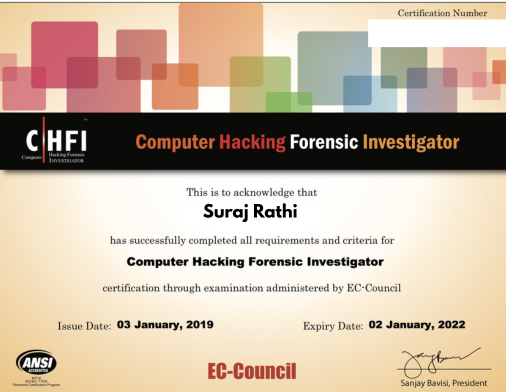
Yes, upon successful completion of the ethical hacking course at Cyber defentech, participants will receive a highly recognized and valid certificate of completion.
There is a growing demand for ethical hackers both in India and across international markets, driven by the increasing number of cyberattacks carried out by black hat hackers. As a result, organizations urgently require skilled ethical hackers to protect their IT infrastructures, which often contain highly sensitive and confidential data.
WhatsApp us